Walkability is a starting point. Your week is the real score.
A walkability label can tell you something useful about a place. A personal model can tell you whether it fits the destinations, pace and trade-offs that shape your life.

Kim
Support Manager
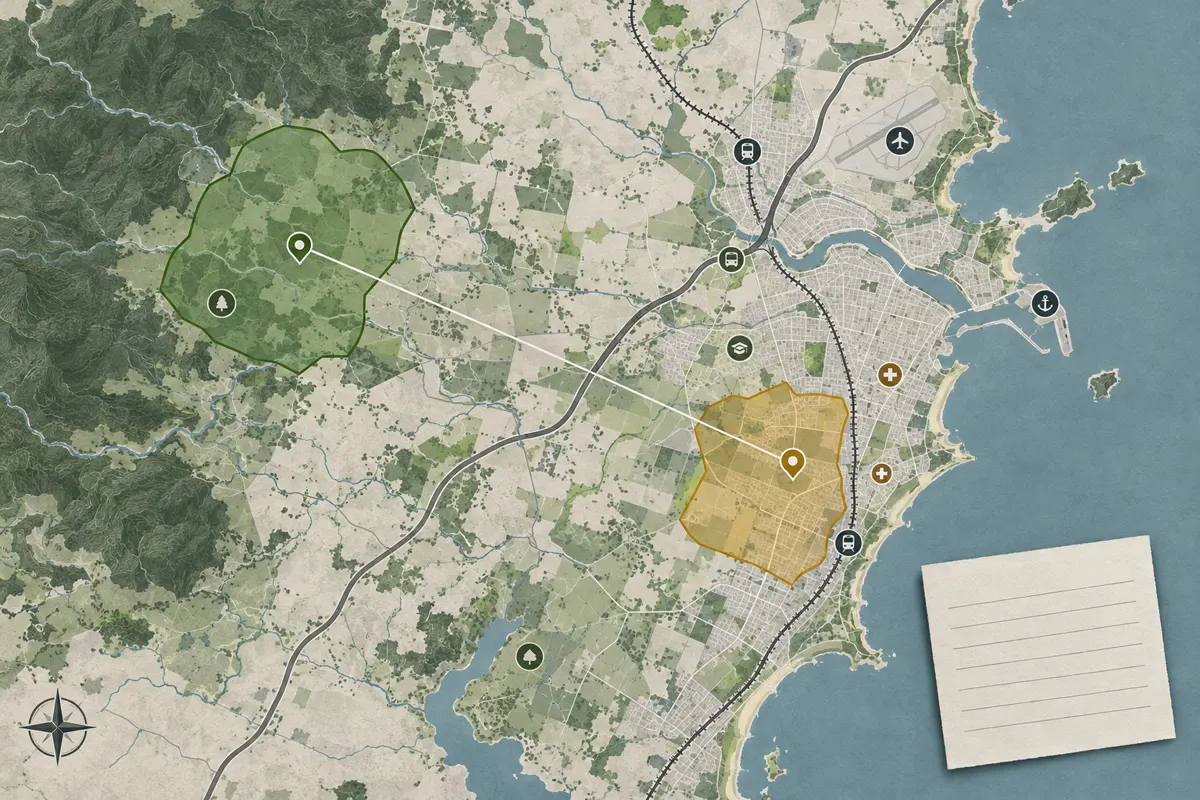
Walkability is useful because it starts with an ordinary question: can you reach the places you use without getting in the car? A walkability score can help compare areas by looking at nearby shops, services, schools, parks and transit, along with how the streets connect.
That score can still miss the walk you actually make. The route to your pharmacy may matter more than the nearest café. A quiet park may matter more than a dense shopping strip. Your own pace, mobility, confidence and reasons for walking change the answer.
What a walkability score can tell you
Most published walkability methods look at nearby destinations, connected streets, density and a chosen distance. Walk Score, for example, follows walking routes to amenities and gives more weight to places that are closer. The Australian Urban Observatory describes transport walkability through access to daily services, street connectivity and dwelling density.
- Something to walk to, such as shops, services, schools, parks or transit.
- A network that gives you a direct and connected way to get there.
- Enough people, homes and activity to support local destinations.
- A distance threshold and weighting method chosen in advance.
These measures make a large area easier to scan. They are pre-calculated answers to a general question. A five-minute amenity threshold, an 800-metre planning reference or a 20-minute return walk can frame the conversation without deciding what those distances mean for your household.
The Goldilocks distance
Walkability often works best in a middle zone: close enough to make a route repeatable, but far enough that the destination’s noise, lights, traffic, opening hours or crowd movement do not become part of the home environment. A station, school or park can be useful a few streets away and uncomfortable at the boundary. The right distance belongs in your brief, not in a generic score.
Close, convenient or too close?
| Location pattern | Potential upside | Potential trade-off |
|---|---|---|
| Train station | A short, direct walk can make work, school and errands easier without requiring a car. | A home immediately beside tracks or platforms may bring noise, announcements, headlights, maintenance access and foot traffic into the home environment. |
| Daily shops | Nearby groceries or a pharmacy can make routine trips easy to repeat. | Being directly beside the activity may mean deliveries, loading, lights, traffic and trading hours you do not share. |
| School | A manageable walk can support independence or a shared school run. | The gate can bring concentrated traffic, noise and parking pressure at the exact times you are home. |
| Park | A nearby park can provide a practical walking loop and everyday open space. | A boundary location may also mean sports lights, events, noise or activity beyond your preferred quiet. |
| Main road or transit corridor | A connected route can reduce travel time and make several destinations reachable. | The shortest route can place the home beside traffic, braking, crossings and exposure you would rather walk past than live beside. |
The score cannot know your walk
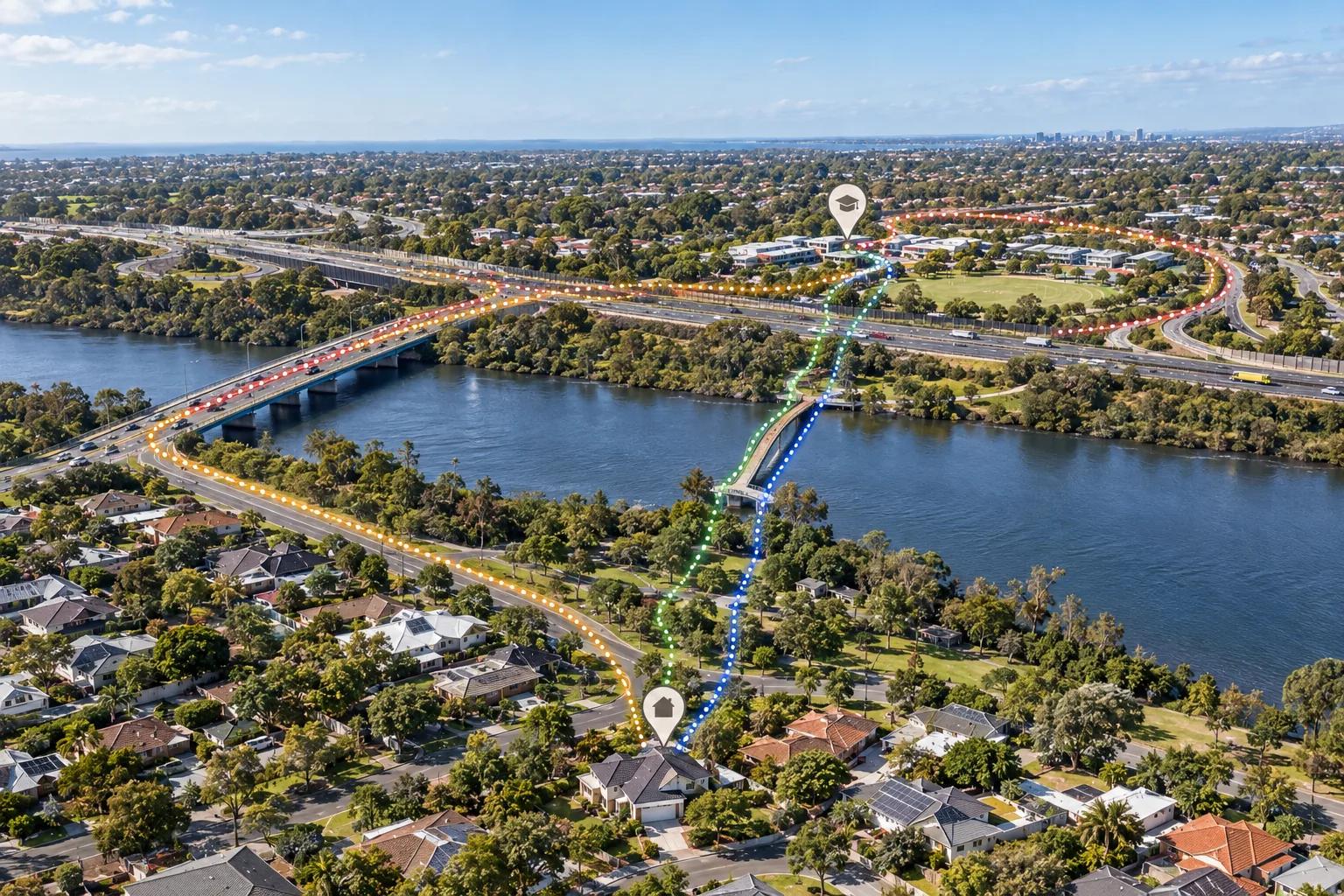
A ten-minute walk is not one experience. It might be flat, shaded and easy with a pram. It might also mean a steep hill, hot pavement, no footpath or a crossing that feels uncomfortable after dark. Age, disability, heat, hills, shade, bags, confidence at crossings and the willingness to walk after dark all change the lived distance.
The destination matters just as much. A general score may count a long list of nearby places, while your week depends on one supermarket, one GP, one train station, one school, a specific park and a quiet route home. A location can offer plenty of activity and still miss the places you actually need.
Walkability can become a trap
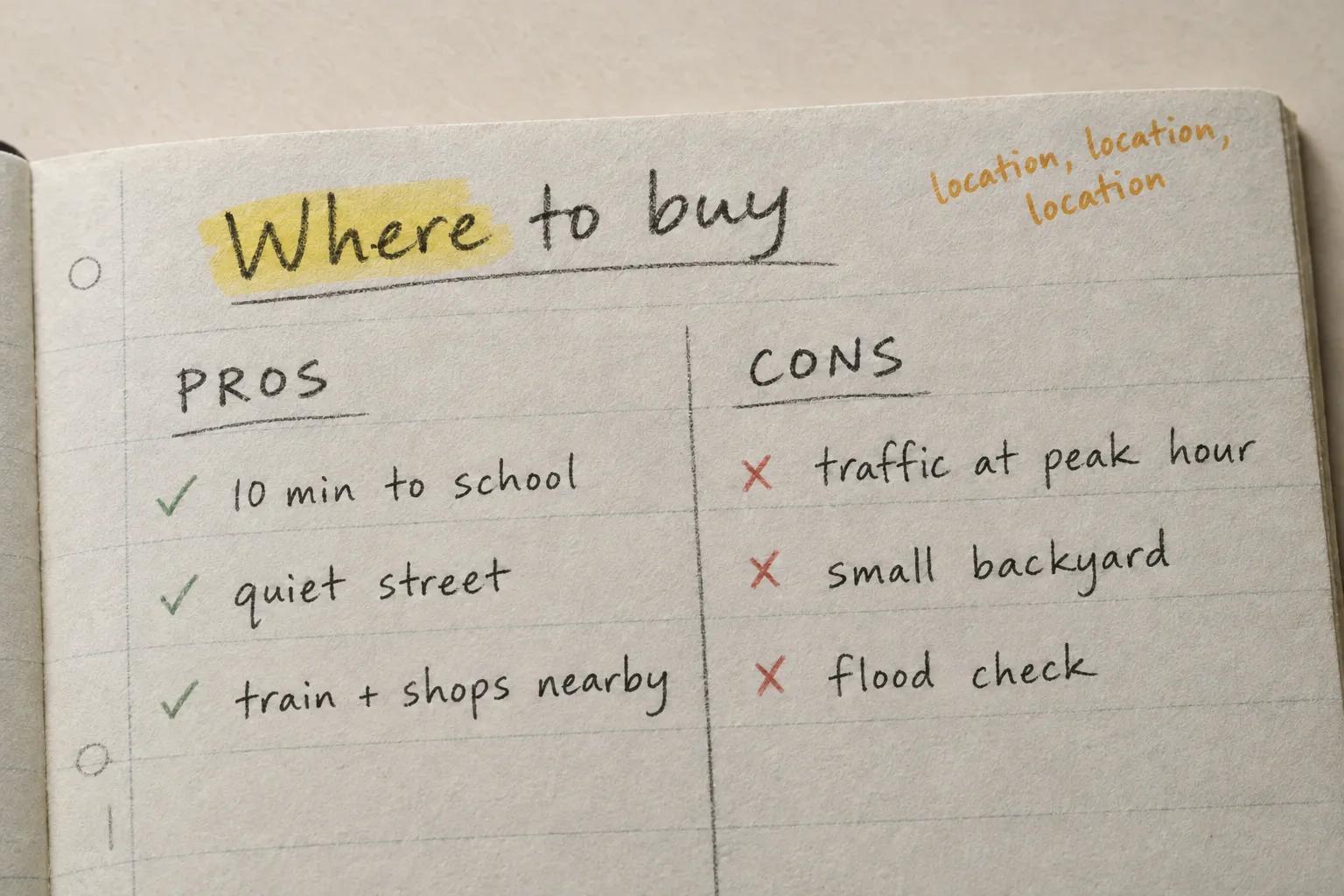
A long list of cafés and transit stops can make a place look easy to live in while the route you need is steep, exposed or difficult to cross. Flood exposure, school-run traffic, a longer work commute or the quiet street your household values may matter more.
A high walkability score can still describe a difficult week. Keep it beside the other requirements and preferences that make an address workable.
Walkability is a starting point. It is not a verdict on whether a place fits you.
From walkability to Walkabout
Walkabout is a proposed editorial label for a personal walkability-style model. It is not a current Kaveat product feature or a new score that Kaveat claims to certify. Describe the walk you want, give the important parts the weight they deserve, and compare locations against that brief.
A Walkabout-style model might value a ten-minute walk to a supermarket, a reliable route to a train station, a park within an easy loop, a GP nearby and fewer difficult crossings. Someone else might prioritise a gentle gradient, shade, quiet streets, mobility access, a school route or a walk to friends. Both models can be reasonable. They are answering different questions.
Ask KAI to help build the equivalent
Tell KAI about the week you are trying to make easier. It can turn that request into a reviewed Requirement or Preference draft for Emptor, giving you a practical way to start a personal walking model without pretending that one public label can represent every household.
An illustrative draft could make supermarket and station access weighted Preferences, treat a difficult crossing as an Avoid, and leave the park as a lower-weight preference. You review those choices before they influence the profile. KAI is helping you express the model; it is not deciding what your life should value.
- Ask KAI to separate firm location requirements from preferences that can be weighted.
- Review the destinations, distances, route assumptions and avoidances in the draft.
- Approve or apply the parts that describe your real week, then inspect the Kaveat Score breakdown.
- Walk or drive the shortlisted routes to check crossings, footpaths, shade, terrain, traffic and service quality in person.
The resulting Kaveat Score expresses how a location aligns with the active model. It does not certify walkability, guarantee route safety or service quality, or replace checking the lived experience. The value is in seeing which assumptions are driving the comparison and changing them when your priorities change.
Let the score serve the life
A generic walkability score can help you find places worth investigating. A personal model helps you ask whether those places support the routines, destinations and trade-offs you actually care about. Start with the established measure, then make the question yours.
Kaveat can help you build that broader location brief through Requirements, Preferences and KAI, then compare candidate areas before you commit to a shortlist. Walkability remains one useful input. Your week is the evidence that gives it meaning.