Location bias and the comfort of familiar markets
The place you know best can feel like the safest property decision. Familiarity can hide how places change, narrows the search area prematurely and concentrates risk.

Chris
Founder
The suburb you know can feel like the market you understand. You have driven its streets, heard its local stories, watched listings come and go, and learned which routes feel comfortable after dark. When a property search becomes an investment decision, that familiarity can feel too useful to set aside.
Sometimes it is an advantage. Local knowledge can reveal details that a spreadsheet misses. It can also create a false sense of completeness.
Familiarity feels like safety because you know the streets, the shortcuts and the parts that seem settled. Recognition can hide a second assumption: the area you remember is the area you are buying into. Demographics, households, businesses, transport and development move over time. The place that felt settled in your memory may not be the place that exists now.
Familiarity feels like research
A local buyer can inspect a property quickly, recognise the street names and call an agent they already know. Local news and local property marketing keep supplying a steady stream of nearby evidence. Each piece may be useful. Together, they can make the familiar market feel more proven than a less visible one.
That is how location bias starts. The mind gives extra weight to places that are easy to see, easy to explain and easy to revisit. Information that supports the existing preference feels relevant. Information from another city, state or country has to work harder to earn attention.
The place you remember is not fixed
An area can keep its name while its population, households, businesses and daily rhythms change. New residents may bring different needs. Older services may close. New transport, construction or land uses may alter how streets feel. Change is not automatically a loss; it means memory is a starting point, not a current profile.
That matters for investors and for people choosing a home. The familiar area may still fit, but the reason it fits should be tested against what is there now and what is changing around it.
What familiarity shows you, and what it can hide
| Location pattern | Potential upside | Potential trade-off |
|---|---|---|
| Known streets and routines | Lower uncertainty, easier inspections and a clearer sense of how the area works day to day. | The feeling of safety can come from recognition, while current traffic, lighting, activity or land use may have changed. |
| Familiar people and local stories | Local conversations can reveal context that is difficult to find from a distance. | Demographic change, new households, closures and new services can make old stories incomplete. |
| Established reputation | A long-standing reputation may reflect genuine demand or qualities worth investigating. | The label can outlive the conditions that created it, especially when current data is not checked. |
| Memorable place qualities | Naming the qualities behind the attachment gives you something to compare in other markets. | Treating one suburb as the only place that can provide them narrows the search before alternatives are tested. |
When proximity becomes a filter
Managing a local property can be simpler. You can attend an inspection, meet a tradesperson, check a repair or visit the neighbourhood between errands. An interstate or overseas property introduces travel, property management, communication and due-diligence questions that can make the local choice feel responsible by comparison.
Convenience deserves a place in the decision. It should be visible as a trade-off rather than hidden inside a claim that the local market is better. A convenient market may be the right market for your time, cash flow, knowledge and tolerance for distance. That is a personal operating decision, not proof of superior growth or yield.
The opportunities that never enter the shortlist
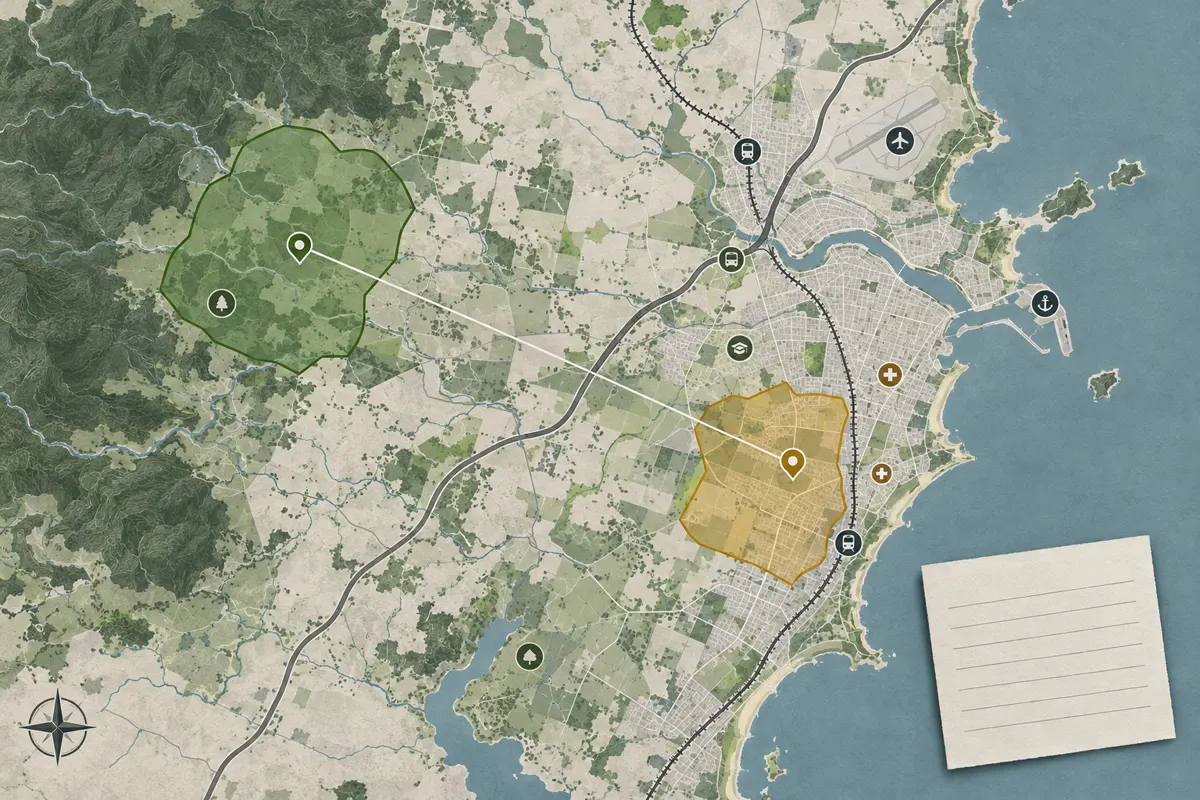
A search limited to a familiar radius can remove markets before they are compared. That may hide different combinations of purchase price, rent, vacancy, employment, population change, transport, supply, insurance exposure and local services. A higher-yielding or faster-growing market cannot enter the decision if it never appears on the screen.
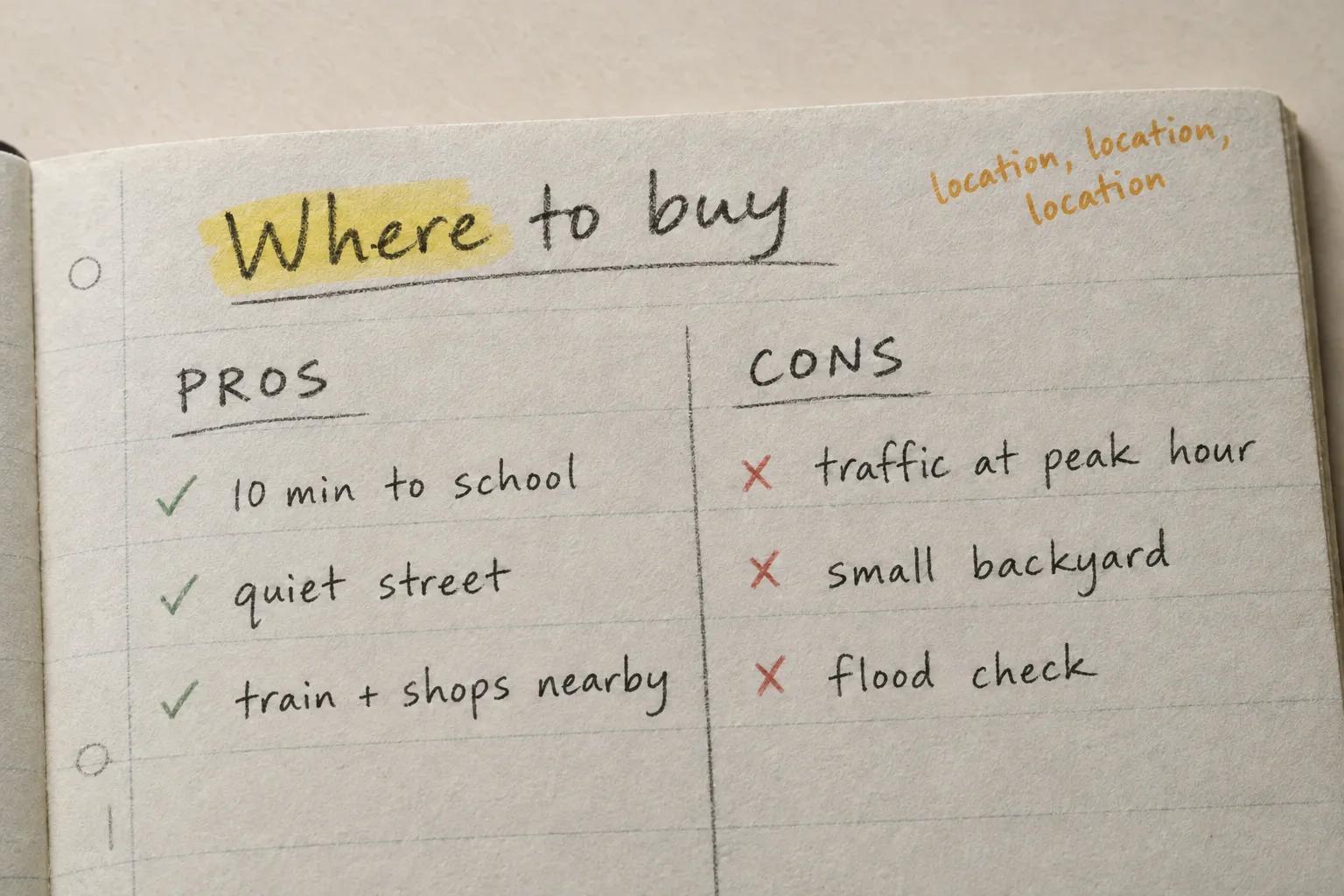
Start by separating the place from the feeling it gave you. Write down what made it memorable: a sense of safety on familiar routes, tree canopy, a quiet side street, a short walk to shops, a community you valued or reliable transport. Those qualities can become requirements and preferences to test in other areas. You may find more than one market that supports the life or investment thesis behind the attachment.
- Compare the same location requirements across several markets before choosing a favourite.
- Separate what you have personally observed from what current market data can test.
- Write down the evidence that would make you expand the search or reject the familiar area.
A local home and a local portfolio can share the same shock
Concentration is easier to see when your home, employment and investment property all depend on the same local economy. A downturn affecting local jobs, rents, development, insurance or demand can reach several parts of your financial life at once. The result is a portfolio that feels familiar while carrying more geographic exposure than it first appears to.
Familiarity is useful evidence. It is not a complete investment thesis.
Distance has a cost too
A wider search still carries travel, management and verification costs. You may need a stronger property manager, more careful local research, reliable contractors and a plan for inspecting the asset without being there. Those costs belong in the comparison alongside the potential benefits of a wider search.
Some investors should stay local. Make that distance decision explicit. If staying local is the priority, record why. If a broader search is worthwhile, define the controls that make it manageable.
Use a wide area before choosing a local one
A disciplined comparison can still lead you back to the place you know. The difference is that the local choice has survived a fair test against alternatives. Start with the factors that matter to the investment scenario, then apply them consistently across the areas you are willing to consider.
- What would this investment need from its surrounding location?
- Which assumptions are based on data, and which are based on my familiarity?
- How would the property and my household respond to the same local downturn?
- What management effort would make a less familiar market workable?
Make the decision personal without making it narrow
Kaveat helps make location criteria visible. Define the requirements and preferences for the scenario, compare candidate areas, and inspect how each location fits the model you chose. The Kaveat Score is a location-research signal, not a forecast of rental yield, capital growth, vacancy, returns or investment risk.
The local market may still be the right answer. The benefit is knowing whether you chose it because the evidence was stronger, or because the map stopped at the edge of what felt familiar.