What does “leafy” actually mean?
Property listings are full of emotive words that capture a feeling about a location without defining it. Turn “leafy”, “well-connected” and “sought-after” into questions you can actually quantify.

Chris
Founder
A property listing has a difficult job. It needs to make a street, a block and a building feel worth inspecting before you have stood there yourself. That is where location shorthand arrives: leafy, vibrant, quiet, blue chip, well-connected, close to amenities.
These words can point to something real. They can also do a lot of emotional work while leaving the useful detail unstated. A buyer reads “leafy surrounds” and supplies their own picture of shade, birdsong and established streets. The listing may never say how much canopy there is, how much light reaches the house, or what the street sounds like at peak hour.
A feeling is not a measurement
The issue is not that every adjective is dishonest. “Leafy” may be a fair description of a tree-lined street. “Quiet” may be accurate for most of the day. The issue is the missing comparison. Leafy compared with what? Quiet at which hour? Nearby by which route, and to what?
Dilbert: “When it rains, the sewer backs up and covers the driveway.”
Dogbert, real estate agent: “Lake view.”
The joke turns a serious defect into an attractive feature by changing the description, not the property. That is the mechanism to watch for in property copy: a pleasant phrase can redirect attention from the condition a buyer actually needs to investigate.
The term can sound harsher than the situation. An agent may use “leafy” sincerely, and a buyer may genuinely value the character it suggests. Here, “weasel words” is a prompt rather than a verdict: when a phrase creates confidence without a clear test, ask what it commits the speaker to and what it leaves you to assume.
“vanity location phrases” also is language that flatters the idea of owning a premium address without defining anything. “Great location”, “convenient”, “vibrant urban living” and “tightly held” can all sound reassuring while leaving evidence up to the reader.
From listing phrase to location question
| Location pattern | Potential upside | Potential trade-off |
|---|---|---|
| Blue chip or golden triangle | May describe an established, tightly held area with strong local demand. | The boundary, evidence and price premium are left undefined; the label can make a high price feel self-justifying. |
| Affluent area | May point to higher household incomes, more expensive homes or visible investment in the local streetscape. | The area is undefined: it could mean a suburb, pocket, street or an agent's comparison. The data source, date and reason for any premium are left unstated. |
| Great or convenient location | A genuinely convenient location can shorten recurring trips and put useful services within practical reach. | “Great” is a conclusion, not a measure. “Convenient” may mean a nearby bus stop while leaving route, frequency, traffic, noise, parking and the destinations you actually use unstated. |
| Leafy or tree lined | Mature canopy can bring shade, character and a different streetscape. | It does not tell you canopy height, sunlight, leaf and sap fall, roots, wildlife activity or access to shops and transport. |
| Well-connected or easy access | Could mean useful access to roads, public transport, services or several routes through the area. | The same network may place the home beside a highway, rail corridor, bus route or heavily trafficked intersection. |
| Amenities nearby, close to or a stone's throw away | A shorter trip to a service you use can return time to the week. | Nearby does not specify which amenities, the actual route, the crossing conditions, opening hours or whether you need a car. If a distance is supplied, it may be a direct “as the crow flies” measurement rather than a drive distance. A travel time may reflect quiet off-peak conditions rather than a realistic weekday trip. |
| Sought-after pocket or tightly held area | May reflect a consistent local preference for a small area within a broader suburb, or owners who are reluctant to sell. | The pocket, turnover, evidence of demand and reason for any premium are often absent; “tightly held” can describe scarcity, sentiment or a sales euphemism. |
| Close to nightlife or vibrant urban living | Restaurants, bars, music and late trading can support an active social life and reduce trips to entertainment. | It may place the home beside a noisy pub or late-night precinct, with heavy foot and car traffic, voices, litter and activity continuing after bedtime. |
| Vibrant neighbourhood | Activity, shops and public life can make a place feel connected and useful. | Activity can also mean traffic, late-night noise, event spillover or less quiet at home. |
| Developing neighbourhood | New services, construction and infrastructure may improve access over time. | The immediate reality may include dust, unfinished streets, construction noise and uncertain delivery dates. |
| Quiet neighbourhood | Lower movement and fewer competing sounds may suit a household that values calm. | Quiet needs a time and comparison point; a street can be calm at midday and busy during school or commuter peaks. |
What “leafy” can hide
Trees are not a flaw. Canopy can cool a street, soften hard surfaces and make a walk feel more pleasant. The useful question is whether the amount and type of canopy suit the address and the people living there.
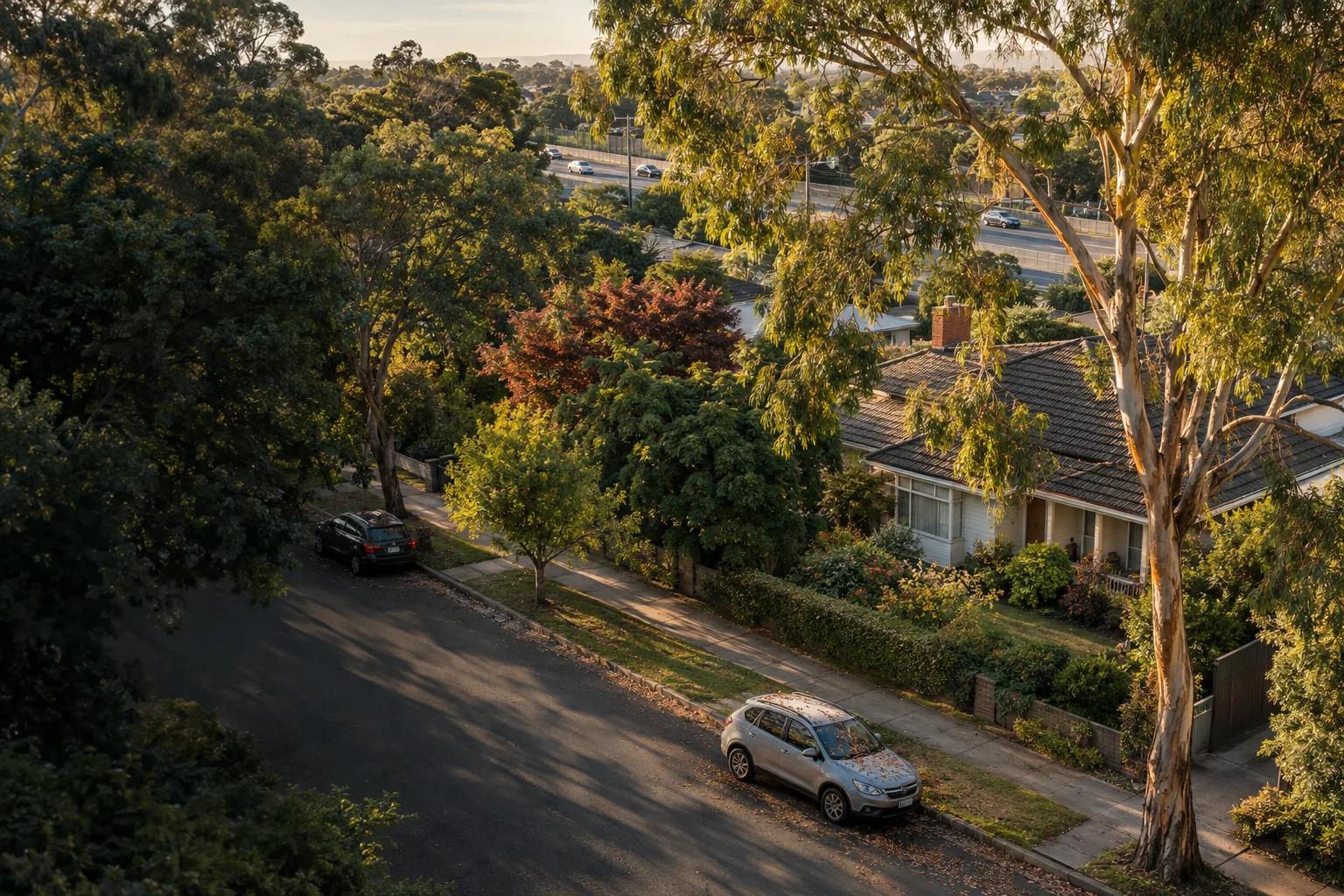
A mature street may also mean less direct sunlight, leaves and sap on cars and roofs, autumn gutter maintenance, roots near pipes or paving, and more wildlife activity. Those are possibilities to check, not automatic consequences of a tree-lined street. The listing word alone cannot tell you where the trade-off sits.
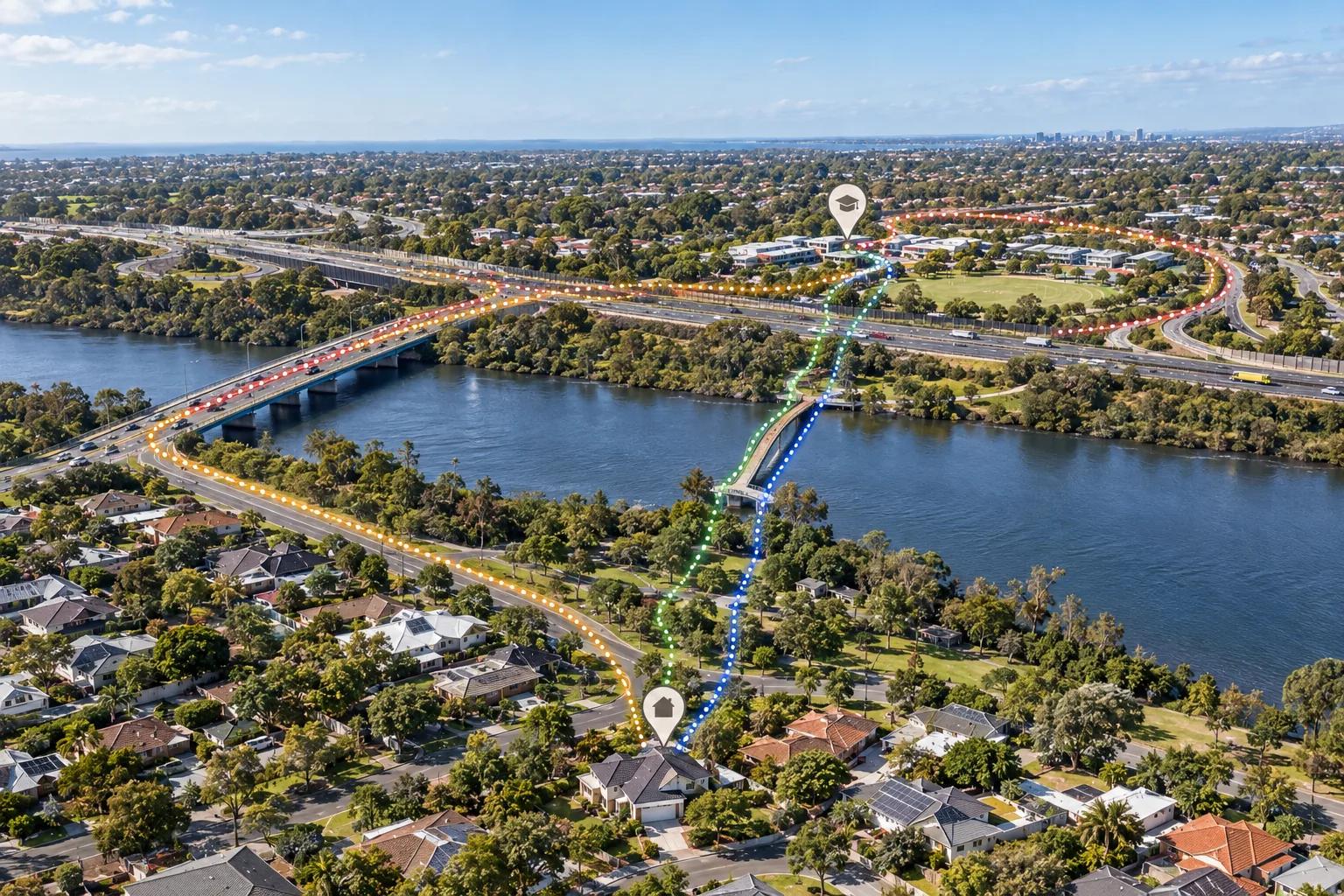
The same translation applies to “well-connected”. Access can make work, school and errands easier. It can also put a home closer to the traffic, braking, announcements or lights that make that connection possible. A map that shows routes without showing proximity and exposure leaves half the location story out.
The legal line is different from the useful line
Australian consumer and property regulators say real estate advertising must not mislead consumers. The ACCC says agents must provide truthful and complete information relevant to a property. State guidance also treats written advertising, verbal statements, photographs and omissions as part of the impression an agent creates.
That does not make every subjective word unlawful. A phrase can be sincerely intended and still be too vague to help you compare two locations. Your task as a buyer or renter is more practical: ask what the phrase means here, what would count as evidence, and which downside deserves a separate check.
Give the word a baseline
Suppose you like leafy streets. You might mean taller trees, more shade, less exposed pavement, a particular outlook or a cooler walk. Someone else might mean a tidy street with a few established gardens but plenty of winter sun. Both preferences are reasonable. They are not the same preference.
Kaveat can make that distinction explicit. Its tree-canopy surface describes the average tree height within each map cell, giving you a concrete signal to inspect instead of asking the word “leafy” to do everything. You can decide what range matters to your brief and how strongly it should influence the wider location score.
The same habit works beyond canopy. Turn “quiet” into the road, rail, intersection and activity context you want to examine. Turn “well-connected” into the destinations, routes and proximity trade-offs that matter to your week. Turn “amenities nearby” into the actual places you would use and the distance you are willing to travel.
Marketing is a starting point, not a verdict
A listing is useful for generating questions. It is not a substitute for the map, a visit at different times, official information or a location model that reflects your household. Romantic language can be a clue, but it should not be the evidence that decides the address.
Ask what the word means here, compared with what, and at what cost.
Kaveat helps you move from a property’s marketing atmosphere to the location evidence behind it. You define what “leafy”, “quiet” or “well-connected” means for your decision, then compare the surroundings against that brief. The goal is not to remove judgement. It is to make your judgement easier to explain.
Sources and further reading
- ACCC: Real estate and false or misleading claims
- Consumer Affairs Victoria: Advertising and representations
- NSW Government: Misrepresentation by property agents
- Propertybuyer: Creative real estate listing descriptions and what they really mean
- Wikipedia: Weasel word
- Scott Adams, Dilbert: “Dogbert the Real Estate Agent” (20 April 2004)