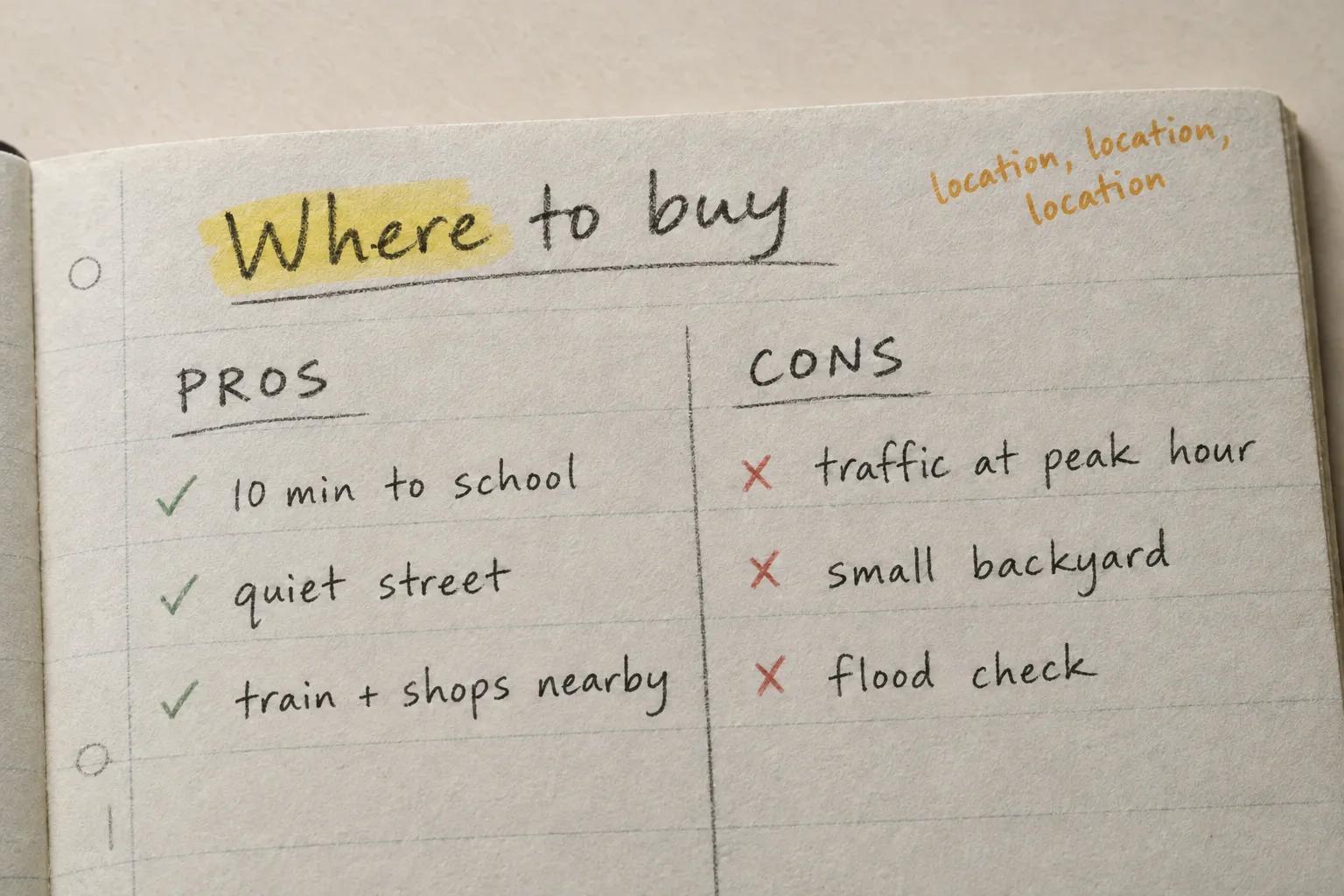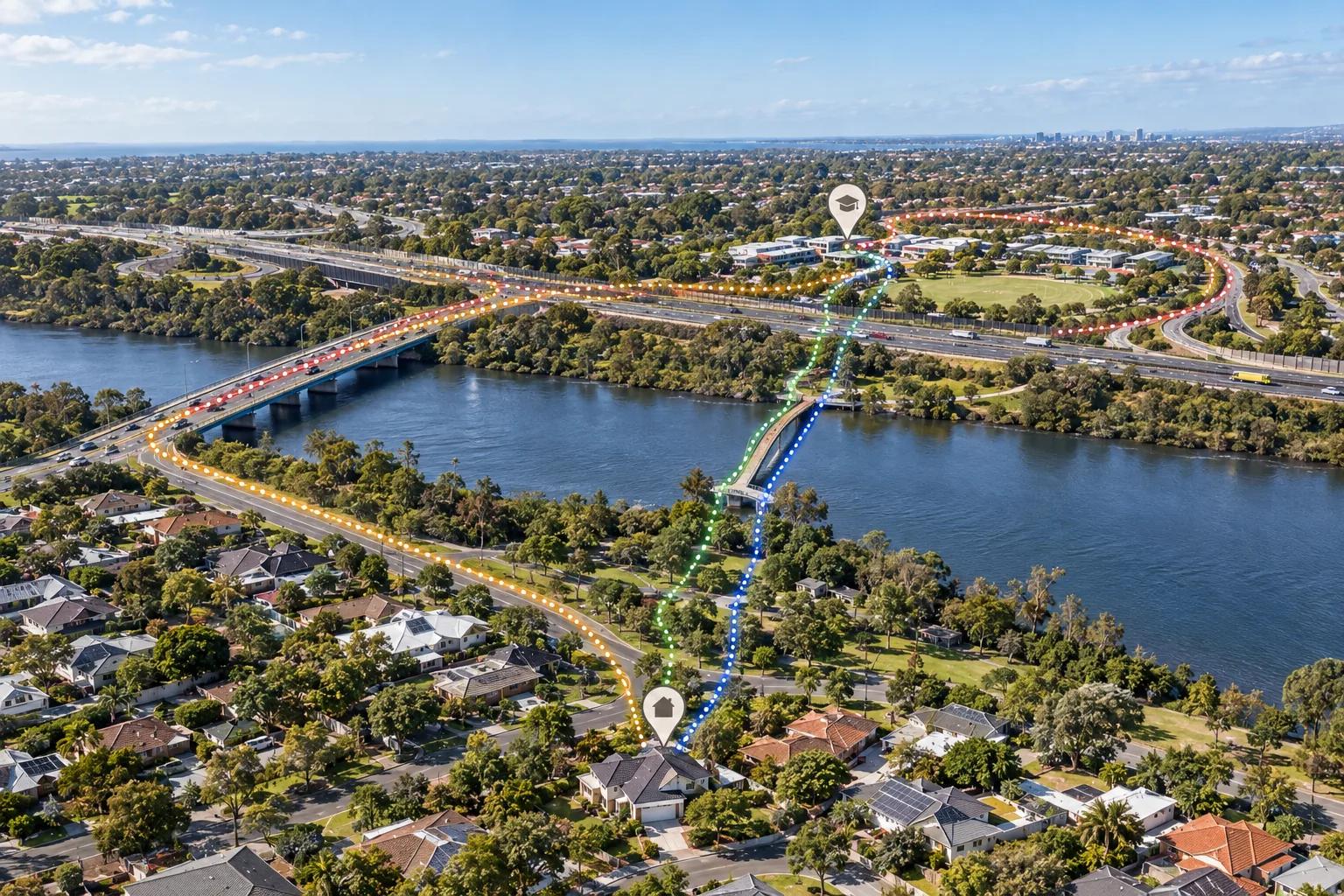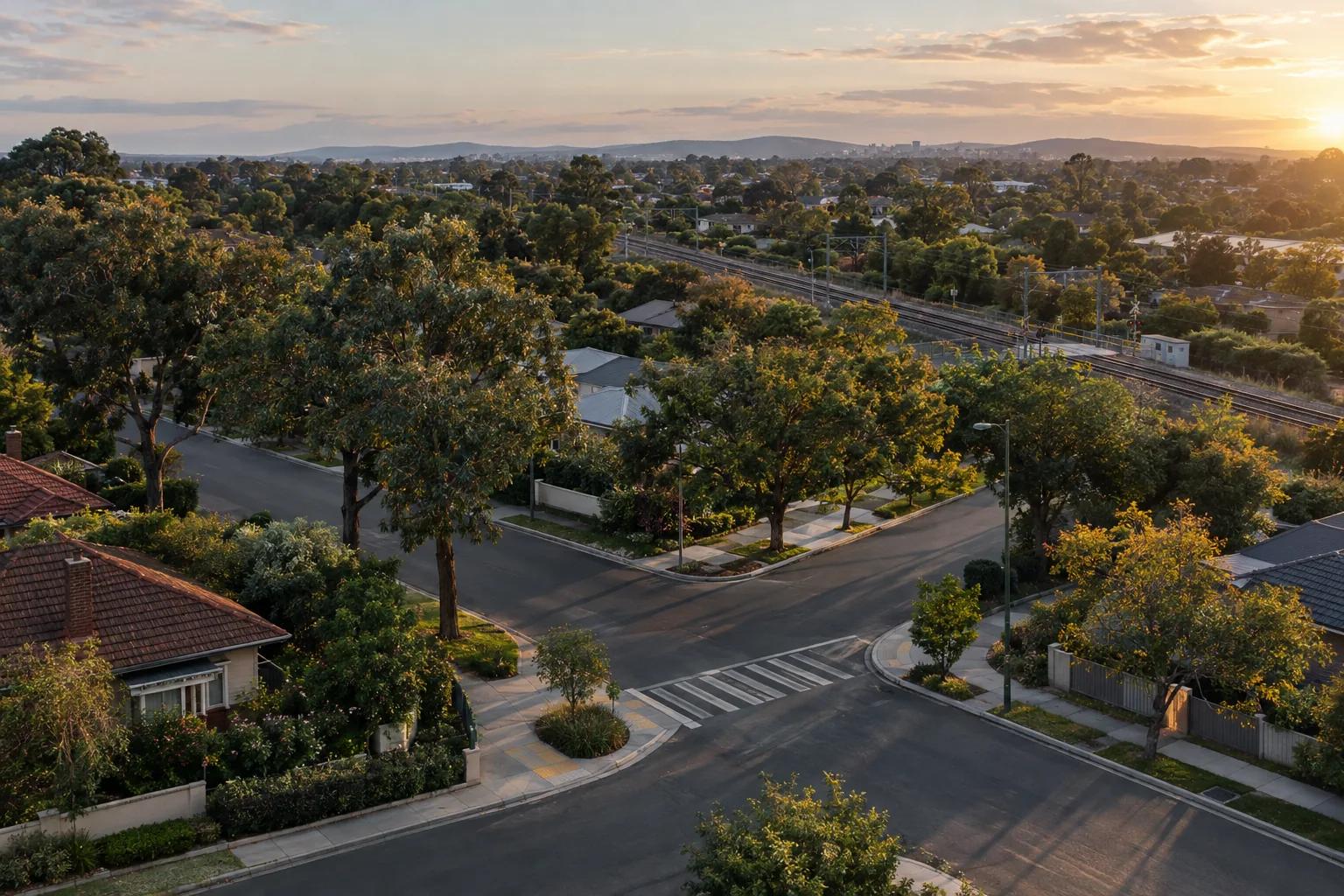
The art of the intersections
Intersections, rail crossings and cul-de-sacs shape the routes, noise and access around an address. Learn what to investigate before you decide where to live.

Chris
Founder
When you assess an address, it is natural to start at the front door. The street edge often shapes the routine beyond it: the crossing on the school route, the headlights at night, the train at the level crossing or the extra access of a corner block.
A road junction is a small part of the map with consequences you may feel repeatedly. It can change how a child gets to school, how easily someone reaches the shops, how traffic sounds from a bedroom or how a business is accessed. A quiet ending can matter too, because fewer vehicles have a reason to pass through.
Start with the route you actually use
Judge an intersection by the routine it shapes. A crossing that matters to a child walking to school is different from one that adds noise to a bedroom, and different again from a junction that gives a business visibility and more than one access point.
The type of intersection changes the question
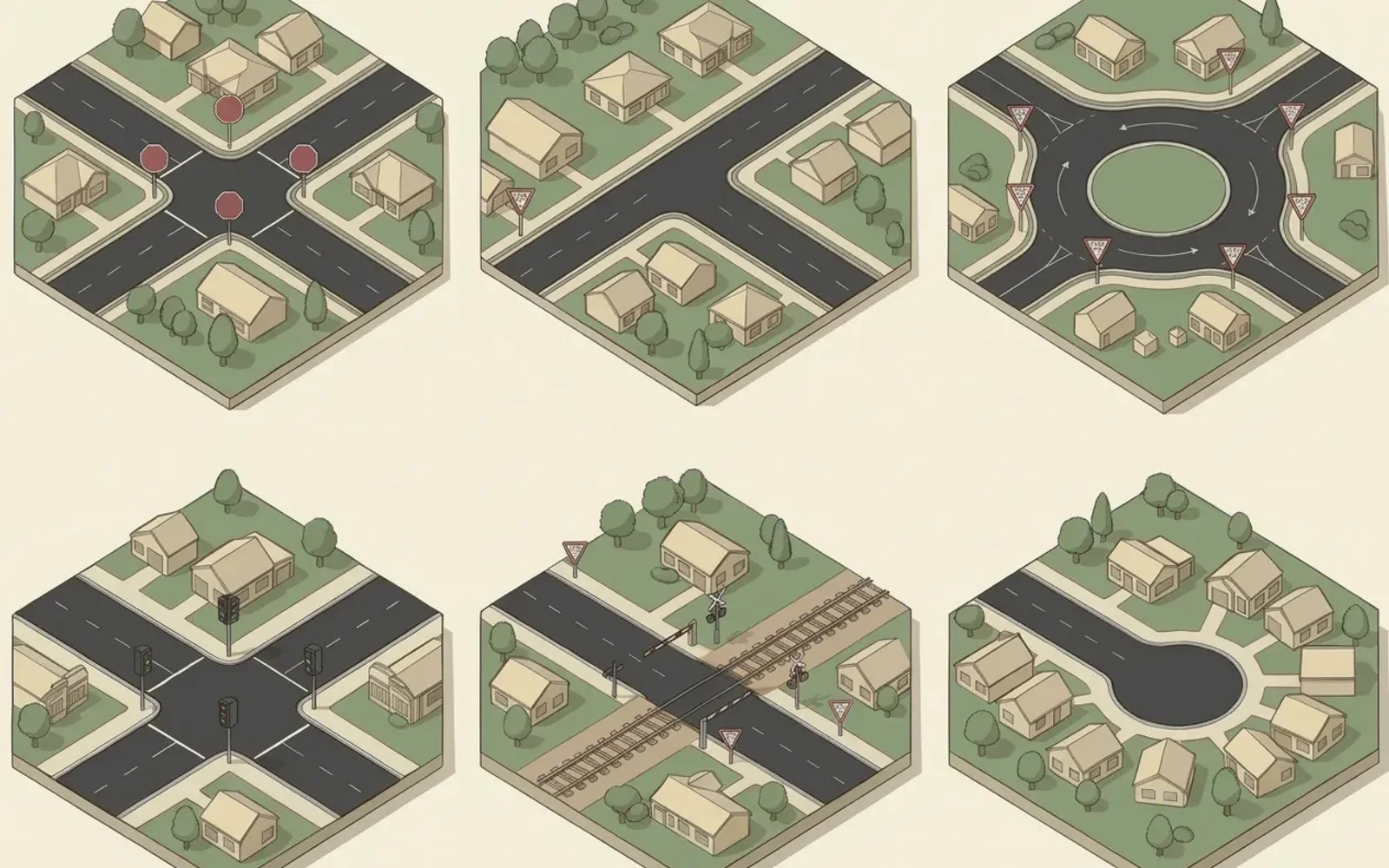
Two quiet residential streets ask different questions from a home beside a major highway. A signalised junction can bring queues, stop-start traffic, truck braking and changing noise. A roundabout changes vehicle paths, sight lines and the way pedestrians cross. A smaller unsignalised intersection may be calm for much of the day but harder to read when traffic, weather or light changes. Check these differences at the times your household will actually be there, not only from a daytime map view.
The same location can mean different things
| Location pattern | Potential upside | Potential trade-off |
|---|---|---|
| Corner block | More than one access point; additional frontage and possible future flexibility | More street exposure; security, maintenance and turning-traffic questions |
| Quiet residential intersection | Easy local access; connected routes without major-road scale | Headlights, sight lines and crossing risk can still matter at the junction |
| Major or signalised road | Direct access; controlled movements can make crossings more predictable | Queues, truck braking, stop-start traffic, noise and evening light spill |
| Level crossing | A direct crossing may preserve an important local route | Bells, braking, vibration, delays and a different set of safety questions |
| Cul-de-sac | Less through movement; a street that can feel calmer | Fewer route choices; longer out-and-back trips and less permeability |
Sight lines can change what enters the house after dark
A broad sight line toward an intersection can carry more than traffic. Headlights from cars and trucks may sweep across front rooms, bedrooms or a living area when the house sits level with the road and there is little screening between the approach and the windows. The effect can be intermittent rather than constant, which makes it easy to miss in a daytime inspection. Stand in the rooms that matter after dark and watch the approach at the times traffic actually moves.
Safety belongs in the street-edge inspection
The WA Road Safety Commission describes intersection crashes as including single-vehicle and multi-vehicle crashes, along with collisions involving pedestrians, cyclists and other vulnerable road users. Austroads notes that serious rural intersection crashes can be associated with speed, poor sight distance, roadside geometry and missing protected turn or acceleration lanes. For a home on a corner, that makes the road edge part of the due-diligence question: where are the fence, verge and house in relation to a place where a driver could lose control?
A recorded crash history does not predict a vehicle entering a particular property. It is a reason to look more closely at setbacks, barriers, sight lines, lighting and traffic conditions when the intersection is busy or fast. Recorded crash context can tell you where to ask better questions; it cannot replace a site inspection or engineering advice.
For parents planning the school walk
Before term starts, walk the route your child is likely to take. Check the crossings and see whether the route remains legible when the weather changes, the light fades or a busy road has to be crossed. Where available, recorded crash history can show which intersections deserve a slower look.
For older pedestrians and the people who plan around them
The same map can ask a different question for an older person: can a regular trip to the shops, pharmacy, library or community centre be made with confidence? If available data identifies crashes involving someone on foot aged 70 or over, that context deserves a closer look. So do crossing times, footpath conditions, gradients, lighting, traffic speed and the places where a person may need to pause.
For buyers and renters sizing up an address
An inspection tells you about the house. Look beyond the fence and ask whether the address sits beside an intersection with a recorded crash history, a road carrying through-traffic or a route that changes character at school pick-up time. That context does not decide the property. It gives you better questions to take back to the street.
For anyone walking somewhere new
An unfamiliar suburb, a route home after dark or a city you have just arrived in can make the map feel abstract. Trace the route between two points and look for the crossings, rail lines and high-movement roads that change the journey. Then check the places that matter in person.
An intersection can be a railway crossing too
Road intersections are only one version of the question. A level crossing is where a road or path meets a rail line, and its influence can be heard as well as seen: warning bells, horns, train brakes, idling traffic, and the rhythm of a barrier closing. It can raise a safety question for pedestrians and drivers, and a noise question for anyone living nearby.
A route can be efficient and still ask for a different kind of attention at the crossing. Look at the available road and rail information, then visit at the times your household will actually be there.
The trade-offs of a corner block
Corner blocks can appeal to buyers who value more than one access point, natural light, a wider street outlook or extra frontage. That frontage may help a business with visibility. For a household, it may create options for parking, a studio, a secondary dwelling or future access.
The same openness can be an access issue or a security concern for another buyer. More street frontage can mean more passing movement, more fencing to maintain, less private garden edge or more points to light and secure. In some jurisdictions, dual frontage may also create planning flexibility for subdivision or a secondary dwelling. Minimum lot sizes, access, sight lines, setbacks, easements and local planning rules decide what is possible, so check with the relevant council or planning authority before assigning it value.
What a cul-de-sac changes
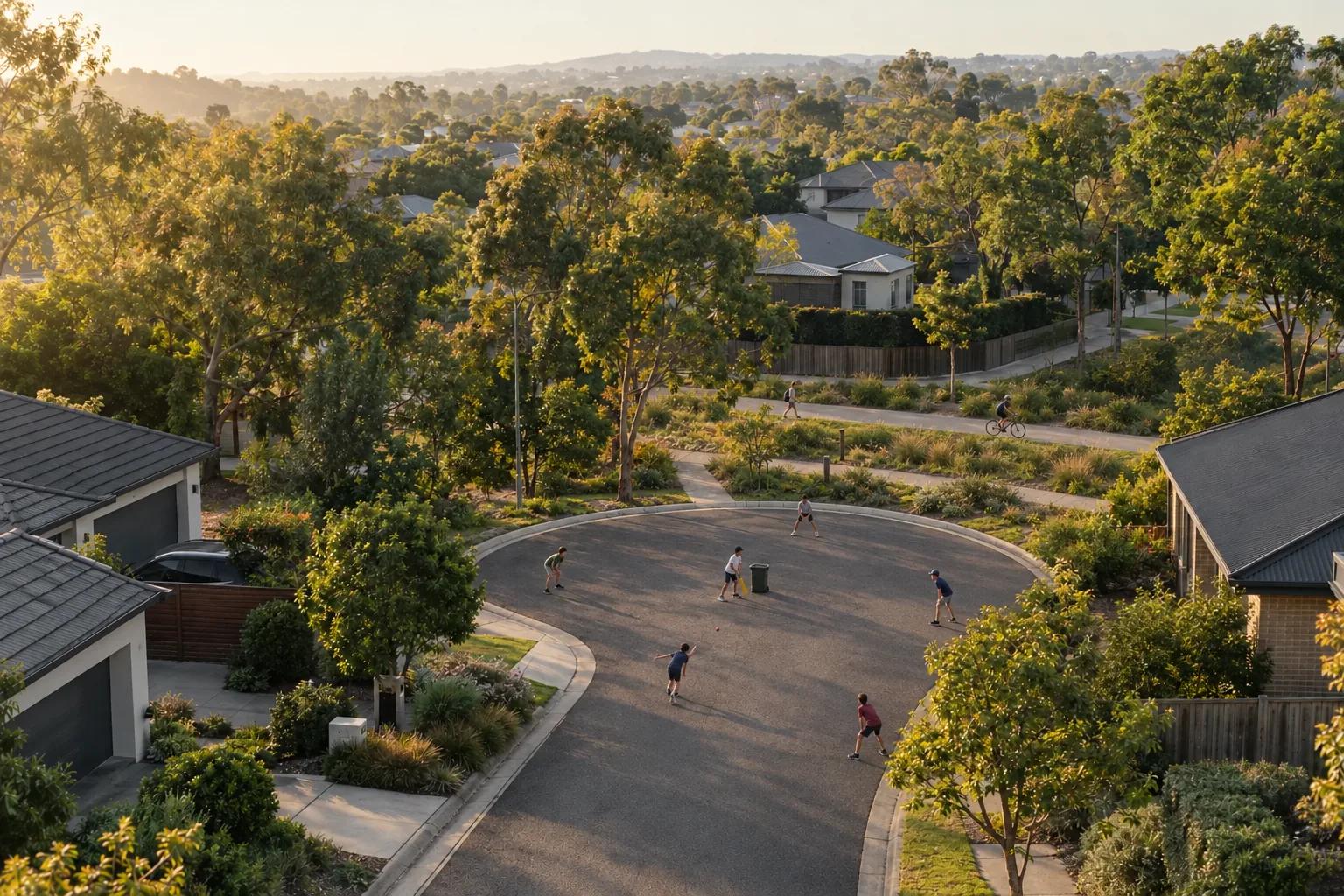
A cul-de-sac is useful because it is not a through route. Fewer cars have a reason to pass, and the street can feel calmer at the front boundary. Those qualities help explain why some buyers place a premium on cul-de-sacs, although the preference is not universal.
Quiet does not remove the need to check convenience. Look at the walk to the footpath, bus stop, shops and open space. Check where visitors turn, how deliveries work, whether emergency access is clear and how the street feels when every household is home. A quiet ending is one useful signal in a wider location decision.
- Trace the routes your household will use rather than judging a suburb from its name.
- Notice where roads, paths, rail lines and services create a choice or a constraint.
- Use recorded context to direct an on-the-ground inspection, not to replace one.
Carry the question into the shortlist
A property inspection and a location assessment answer different questions. Kaveat helps you define the location priorities that matter to your household, inspect the spatial evidence behind them and carry that reasoning into shortlisted addresses.
Use the model to decide what deserves a closer look, then return to the street, official records and qualified professional advice before making a final decision.
Sources and further reading
- WA Government: Intersection crashes safety topic information sheet
- Austroads: Rural intersection crashes (AP-T154-10)
- Main Roads WA: Selection of intersection control
- ONRSR: Level crossing safety
- ACT Government: Corner Blocks Advisory Note 17
- Victorian Government: Subdivision
- AAMI: Decade of Driving Crash Report 2024