Location, price or quality: what comes first?
Property decisions often pit location, price and quality against one another. Start with the location your life needs, then test which price and property trade-offs preserve it before a budget or beautiful house narrows the map.

Chris
Founder
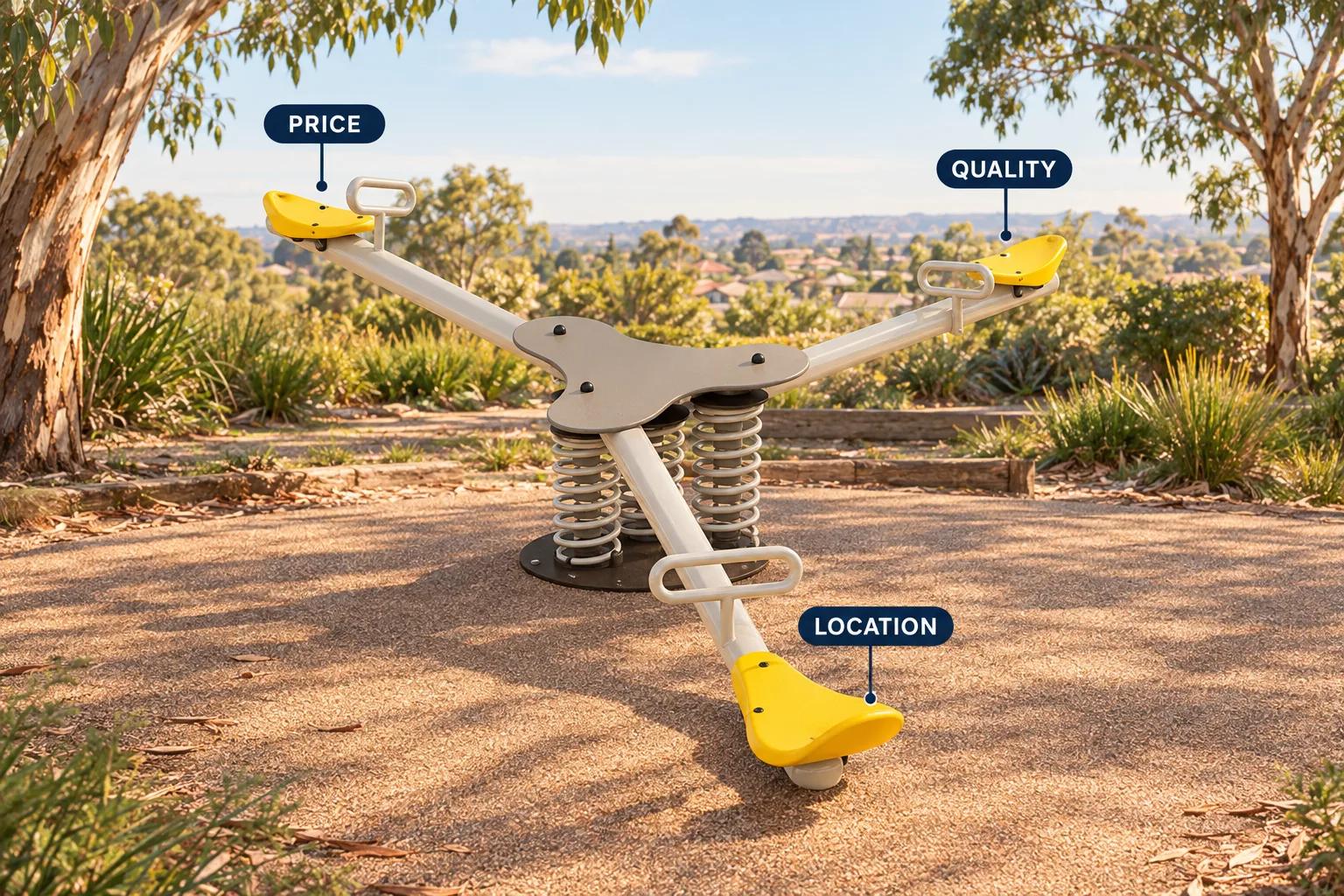
Property advice often compresses a complicated decision into three words: location, price, quality. Buyers want the right area, a home that works and a price that leaves room for life. Those goals rarely line up.
Most searches start with price because a lender, broker or calculator supplies a number and property portals show homes inside it. Quality follows: more bedrooms, a newer build, a larger block or a better layout. Location is then the part most likely to be traded away.
The case for starting with location
Location is hardest to replace after settlement. You can renovate a kitchen, reconfigure a bedroom or improve a garden. You cannot easily change a home's relationship to roads, transport, shops, schools, parks, workplaces, hazards and surrounding land uses.
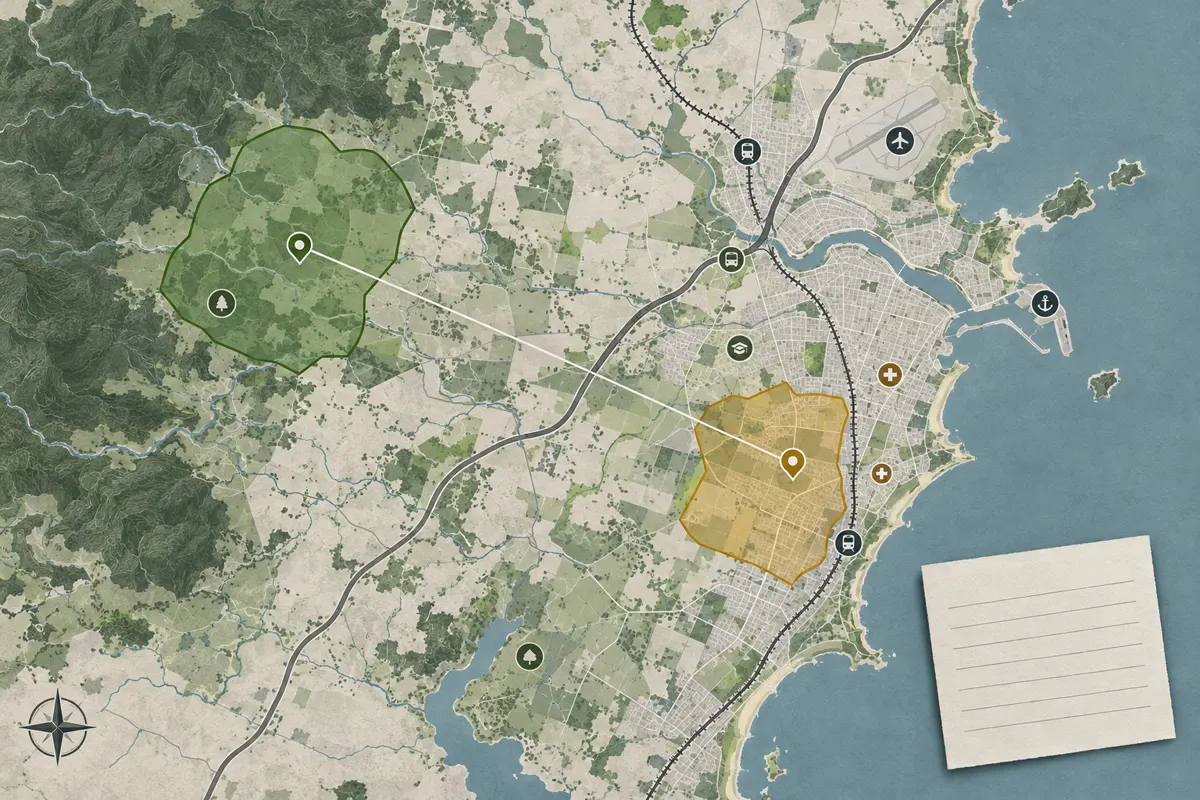
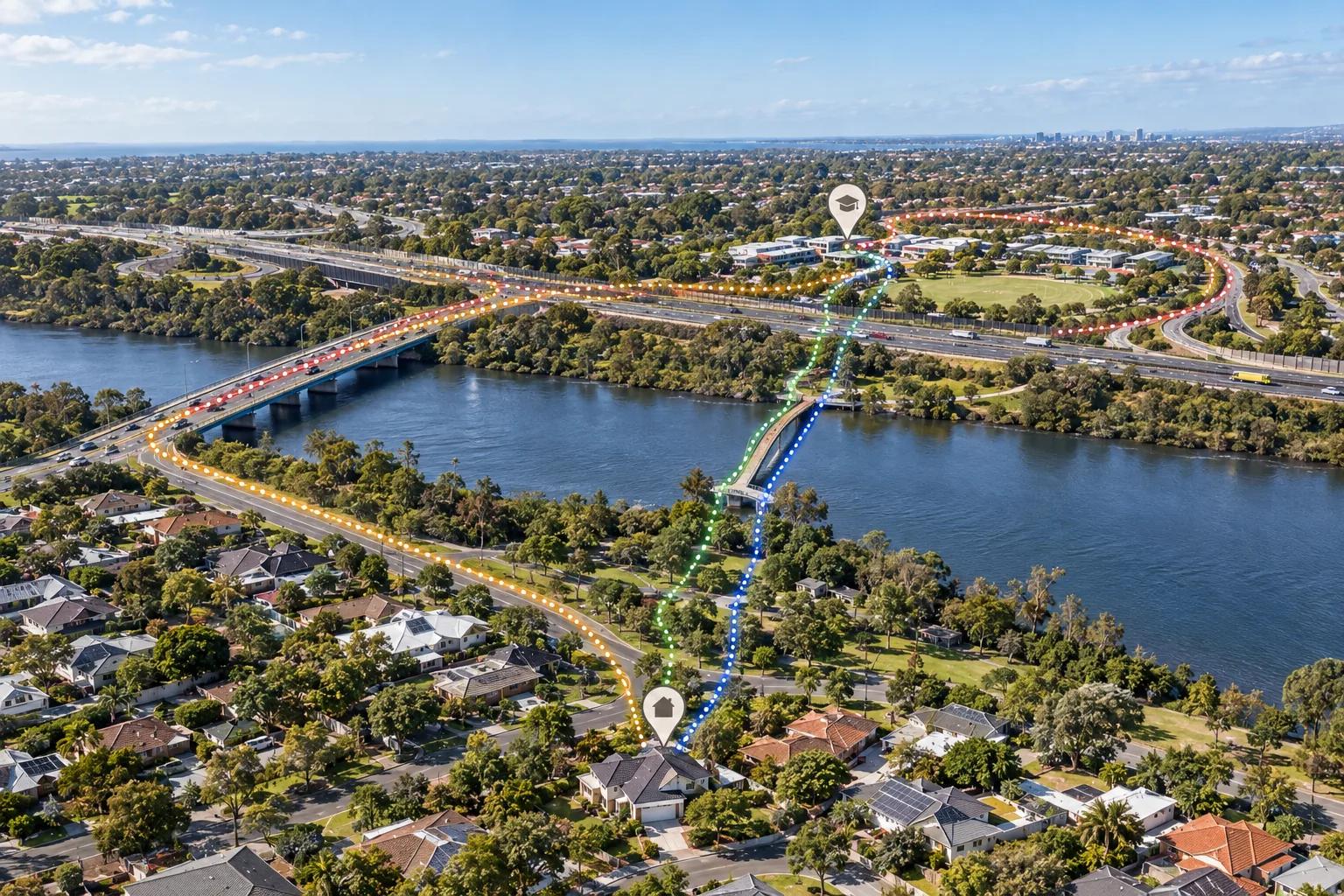
Make the location question specific before a listing sets the terms. Which routes must work? What noise is tolerable? What should be nearby, and what should stay at a deliberate distance? A personalised location is a set of relationships, not a suburb name.
This is Kaveat's editorial position: test the location that could support everyday life, then use price and quality to choose among properties within it. It is an order of questions, not a universal rule. Accessibility, a non-negotiable school route or a hard financial limit may change the sequence.
What each starting point can reveal or hide
| Location pattern | Potential upside | Potential trade-off |
|---|---|---|
| Price-first | Creates an immediate boundary and makes repayment scenarios easier to compare. | Can anchor the search to a maximum loan and make a cheaper, better-fitting area invisible. |
| Quality-first | Protects the dwelling features that affect comfort, maintenance and household capacity. | A beautiful home can make surrounding traffic, noise, access or future change feel like an acceptable afterthought. |
| Generic suburb-first | Gives the search a familiar name and a quick way to compare listings. | A suburb can contain different streets, corridors, land uses, travel patterns and micro-locations. |
| Personalised location-first | Tests the surroundings against the household's own routes, constraints and preferences before shortlisting homes. | Requires clearer thinking up front and does not replace inspections, valuation, lending or property due diligence. |
A borrowing limit is not a household budget
A lender's maximum is a financing input, not a recommendation. MoneySmart's mortgage calculator estimates borrowing power from an affordable repayment. The largest loan on paper can leave less room for rate changes, repairs, insurance, childcare, travel or reduced income.
Australian lenders also assess serviceability against their own criteria. APRA's serviceability buffer is a lending-system safeguard applied above the loan rate. It supports repayment resilience, but it does not know which compromises suit your household or whether a location supports your routines.
Quality is more than a new kitchen
Quality describes the property itself: a house, apartment, villa or unit; its age, construction, rooms, floor area, storage, light, accessibility, outdoor space, energy performance, condition and layout. Some are visible at inspection; others require documents or specialist checks.
Quality is personal too. One household may prefer a low-maintenance apartment; another needs a yard, workshop or ground-floor bedroom. Define what matters, separate Requirements from Preferences and be honest about what can change later.
Why a postcode is a poor substitute for a location
A postcode is an administrative label, not a description of daily life. One suburb can contain a cul-de-sac, arterial edge, rail corridor, school zone, shopping strip and new development. Two addresses with the same name can offer different walks, commutes, noise and service access.
ABS geographies and Australian Urban Observatory indicators make that variation visible. One index cannot choose a home. Useful analysis is often more detailed than the label used by a listing portal.
Mindless map browsing is still anchoring
Opening a map and watching listings appear feels like progress. It can also turn the search into visual impulses: a renovated kitchen, a lower asking price, a larger block or a promising photo. Each listing becomes a reason to redraw the boundary, while the original location questions fade.
Define the location conditions first, shortlist areas that meet them, then compare the properties available there. If an area is too expensive, test nearby places with the same underlying qualities. Commute, public transport, parks, road exposure and access to shops may transfer better than a suburb's reputation.
Let location narrow the choice, then let price and quality discriminate
Kaveat turns a broad location idea into a personal model. Use Requirements for conditions that shape the candidate geography. Use Preferences for factors you are willing to balance, such as access, distance from a corridor, tree canopy, transport, services or other context. It shows which areas merit property research.
Once the location set is useful, price and quality can discriminate. Compare dwelling type, age, size, layout, condition and asking price inside a location that already works. This may reveal a smaller home in a better-fitting area or a less expensive area with the qualities you actually wanted.
It also makes compromise explicit. You may accept fewer bedrooms for a shorter school run, an older dwelling for better access or a smaller block to keep work and daily services practical. Judge those trade-offs with the location preference visible, not buried beneath a listing's finishes.
Location first does not mean location only
A location model cannot tell you whether a building is sound, what a lender will approve, whether a price is fair or whether a property will deliver a particular investment return. Kaveat works at the macro location level. Building inspections, strata and title review, planning checks, valuation, conveyancing, lending advice and other professional due diligence still belong in the decision.
Put each question in the order where it is most useful. Start with the surroundings that will be difficult to change. Then use the property and its price to find the best fit within that location. The three-way decision becomes clearer when the map shows what you are protecting, what you will trade and which compromises are yours.
Choose the location you can live with first. Let the house and the price decide which version of it you can buy.