Location by omission: what property listings leave out
A listing can show the house accurately and still leave the wider location unfinished. Learn what to ask about roads, plans, access and hazards beyond the property boundary before an attractive description becomes your whole picture.

Kim
Support Manager
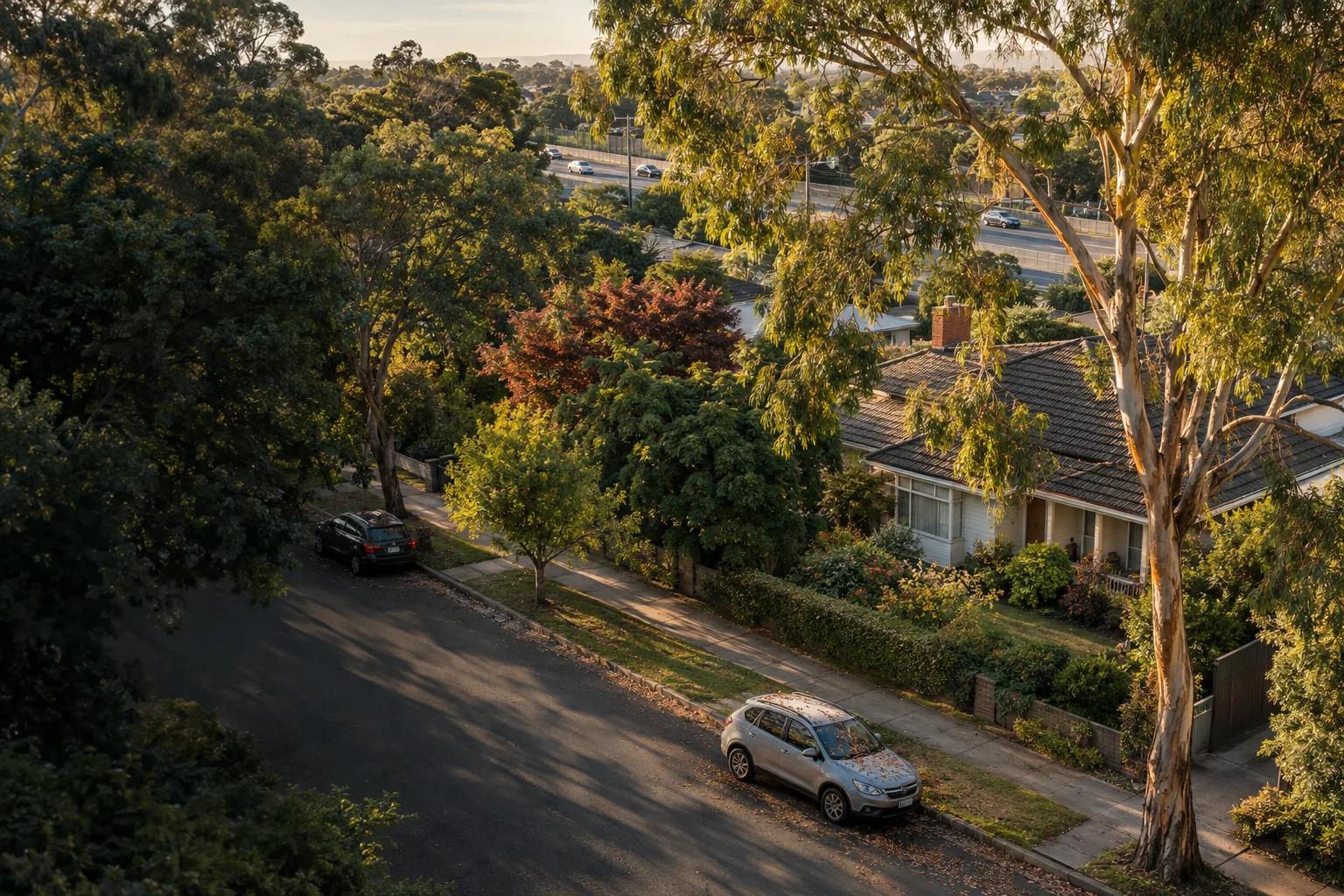
The listing is polished. The kitchen catches the light, the garden looks private and the copy promises easy access to shops, transport and the city. During the inspection, you notice a road reserve behind the back fence, but the agent describes it as a future improvement and moves on to the next room.
That alone does not establish that the agent has lied. The location story is still unfinished. The house is only one part of it; the wider location includes what sits beyond the boundary and what may change around it. The road may be planned, funded, approved, proposed or no more than a line in an old planning document. The difference matters, and it is not something a set of listing photographs can settle.
A listing can be accurate while the wider location remains unclear
The Australian Competition and Consumer Commission says real estate agents must give truthful and complete information relevant to a property, including its features, location, zoning, history and the use that can be made of the land. False or misleading conduct can be unlawful even when the agent did not intend to mislead.
Silence is more complicated. An omission can mislead when it creates a false impression, when there is a reasonable expectation that the information will be disclosed, or when a direct question receives a partial answer. A listing is also a short marketing document, not a title search, planning certificate, flood assessment, building inspection or audit of the wider location. Those roles should not be confused.
Three questions to keep separate
| Location pattern | Potential upside | Potential trade-off |
|---|---|---|
| Was the statement misleading? | An advertised feature, photograph or location claim should not create a false impression about the property. | An optimistic phrase is not proof of a breach; the wording, context, evidence and effect on a reasonable buyer matter. |
| Was a material fact omitted? | A known fact that could affect a reasonable buyer’s decision or the property’s market value may need to be disclosed under the applicable law. | The definition, timing and prescribed examples vary between states and territories. |
| What must the buyer check? | Title, planning, building, environmental and wider-location checks can test the parts of the decision a listing cannot prove. | Due diligence remains necessary even where a seller disclosure scheme or agent duty applies. |
There is no single Australian disclosure rule
Property regulation is state and territory based. The ACCC explains the national consumer-law baseline, while local regulators set additional rules for agents, vendors, contracts and prescribed disclosures. The same unanswered question can therefore have a different legal pathway depending on where the property sits.
In New South Wales, an agent must not induce a person to enter a contract through a false, misleading or deceptive statement, or by failing to disclose certain prescribed material facts that the agent knows or ought reasonably to know. NSW guidance also explains that concealment can include silence or telling only half the story where disclosure is reasonably expected.
Victoria separately prohibits an agent from knowingly concealing a material fact and warns that representations about a property’s location, future development and potential must be accurate and complete. Queensland’s seller disclosure scheme, which began on 1 August 2025, requires key documents and information to be given before a contract is signed, while also stating that matters such as flooding history and structural soundness are not generally included in the standard statement. Western Australia has no mandatory seller disclosure statement for a private sale, but Consumer Protection WA still tells buyers to ask about concerns and says agents must disclose relevant facts, especially when asked directly. South Australia uses a prescribed Form 1 vendor statement with information about interests affecting the land.
These examples show why a confident national sentence such as “agents must disclose every location negative” is unsafe. The obligation depends on the jurisdiction, the fact, what was known or reasonably discoverable, how the question was asked, and what the transaction documents require.
Disclosure is not a bold-font contest
A material fact does not become properly disclosed simply because it appears in large type on every advertisement. The practical questions are what information must be communicated, to whom, in which document and at what stage of the transaction. A listing is one part of the property record, and it cannot describe every factor beyond the lot boundary.
For an apartment or complex building, the location and ownership story may be spread across the contract, title, easements, strata or body corporate records, meeting minutes, levies, insurance, defect reports, planned works and notices. Receiving those documents is part of becoming informed, but it is not the same as reading them or understanding their consequences. A buyer still needs to look for the facts that matter to the decision and get conveyancing, strata, building or other advice where the documents raise questions.
Materiality is contextual. One buyer may treat a special levy, traffic corridor or shared access arrangement as a dealbreaker; another may accept it at the right price. The legal test is not simply whatever one person dislikes. It often asks what would matter to a reasonable buyer, while some guidance also recognises facts known to matter to a particular buyer. A seller or agent should not guess that silence is harmless. A buyer should not assume that receiving a document means the wider location has been explained.
The wider location details most likely to change the decision
A future road widening, rail project, rezoning proposal or large development can change access, noise, light, views and construction activity. A plan is not the same as a funded project, and a funded project is not the same as a finished one. Ask what document supports the claim, which authority controls it, what stage it has reached and which part of the wider location could be affected.
Access questions can be quieter and just as important. A shared driveway, right of way, easement, disputed boundary, unapproved access or service corridor may shape how the property can be used. The attractive corner block may have extra frontage; it may also have more road exposure, a drainage reserve or an access arrangement that needs legal advice.
Environmental and neighbourhood context deserves the same care. Flood history, bushfire exposure, contaminated land registers, heritage controls, traffic noise, industrial activity and a nearby transport corridor may matter to one buyer more than another. A photograph that excludes a freight route is not automatically deceptive. It becomes a problem when the wider presentation implies a quiet outlook that the agent knows is false, or when a known material fact is concealed where disclosure is required.
Ask questions that leave less room for a polished answer
Broad questions invite broad reassurance. Ask for the fact and the source instead. “Is there any planned road, rail or major development that could affect this property or its wider location?” is more useful when followed by “Which authority’s document should I read?” Ask whether the home has been affected by flooding or bushfire, whether there are easements or shared access arrangements, and whether any notices, orders or planning applications affect the land or nearby interface.
- Ask for important answers in writing and keep the listing, contract documents and attachments together.
- A request for a written answer may produce a “We’ll get back to you” rather than a verbal response that can later be disputed.
- Ask what is known, what is proposed and what is only an agent’s interpretation.
- Ask whether the answer relates to the lot itself, the street, or the wider location around it.
- If the agent does not know, ask which council, planning authority, conveyancer or qualified adviser can confirm it.
The checks a buyer still owns
Start with the official planning and transport sources for the address and surrounding area. Check the title, plan, easements, covenants and any disclosure statement with a conveyancer or solicitor. Use the relevant state hazard and environmental registers, then arrange building, pest, engineering or other professional inspections where the property requires them. Visit at different times of day and week. A listing cannot tell you whether the traffic outside the front room is tolerable at school pick-up, whether the flood channel fills after heavy rain or whether the shortcut you assumed exists on foot.
Start with the Requirements that define the location conditions you would rule out, then use Preferences to express the trade-offs you can compare within the wider location that remains. That structure does not decide whether a property is legally suitable. It helps keep the location question visible before the house, price and sales language take over.
Where Kaveat fits
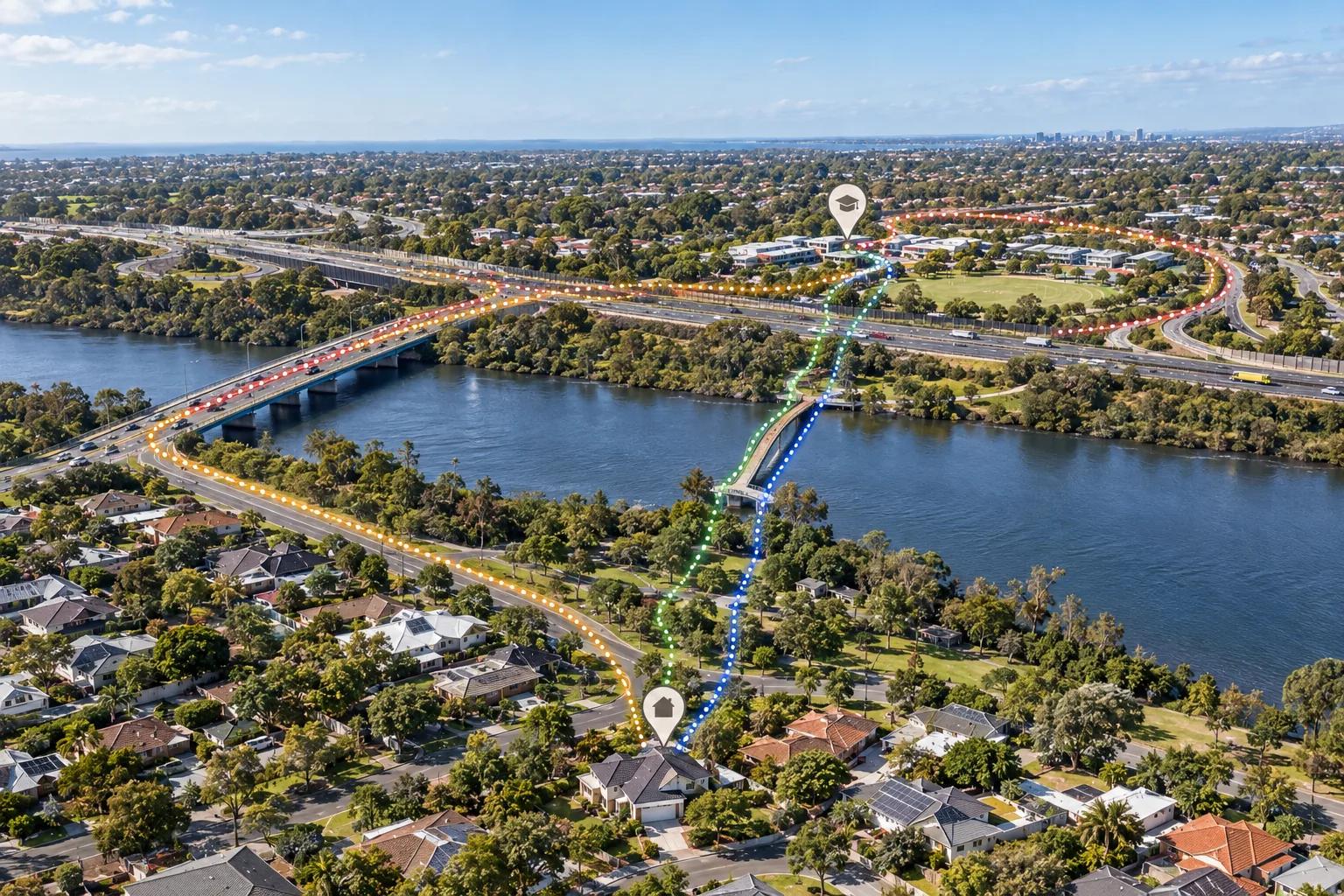
Kaveat works at the macro-location level: the geography around an address and the wider location that shapes how it is reached, used and experienced. It can help reveal relationships to roads, transport, services, hazards and other mapped context that deserve a closer look and generally is not included in a property report.
The goal is not to treat every omission as misconduct. It is to stop a well-framed listing becoming your only source of truth about the house or wider location. Read the documents, ask the uncomfortable location questions, check the routes and surrounding land, and get professional advice where the answer affects the contract.
Sources and further reading
- ACCC: Real estate
- NSW Government: Misrepresentation information for property agents
- NSW Government: Real estate agent advertising laws
- Consumer Affairs Victoria: Advertising and representations
- Consumer Affairs Victoria: Preparing to sell your property
- Queensland Government: Seller disclosure scheme
- Consumer Protection WA: Buying property by private sale
- WA Government: The material fact of the matter when buying a home
- Consumer Protection WA: Disclosure of material facts to buyers and tenants
- Consumer and Business Services SA: Form 1 vendor statement guidance
- Smart Property Investment: What property owners must disclose when selling
- REIWA: Eight material facts to disclose when selling
- Property Update: What property sellers have to disclose