
Model the location you actually want, even when it breaks the usual rules
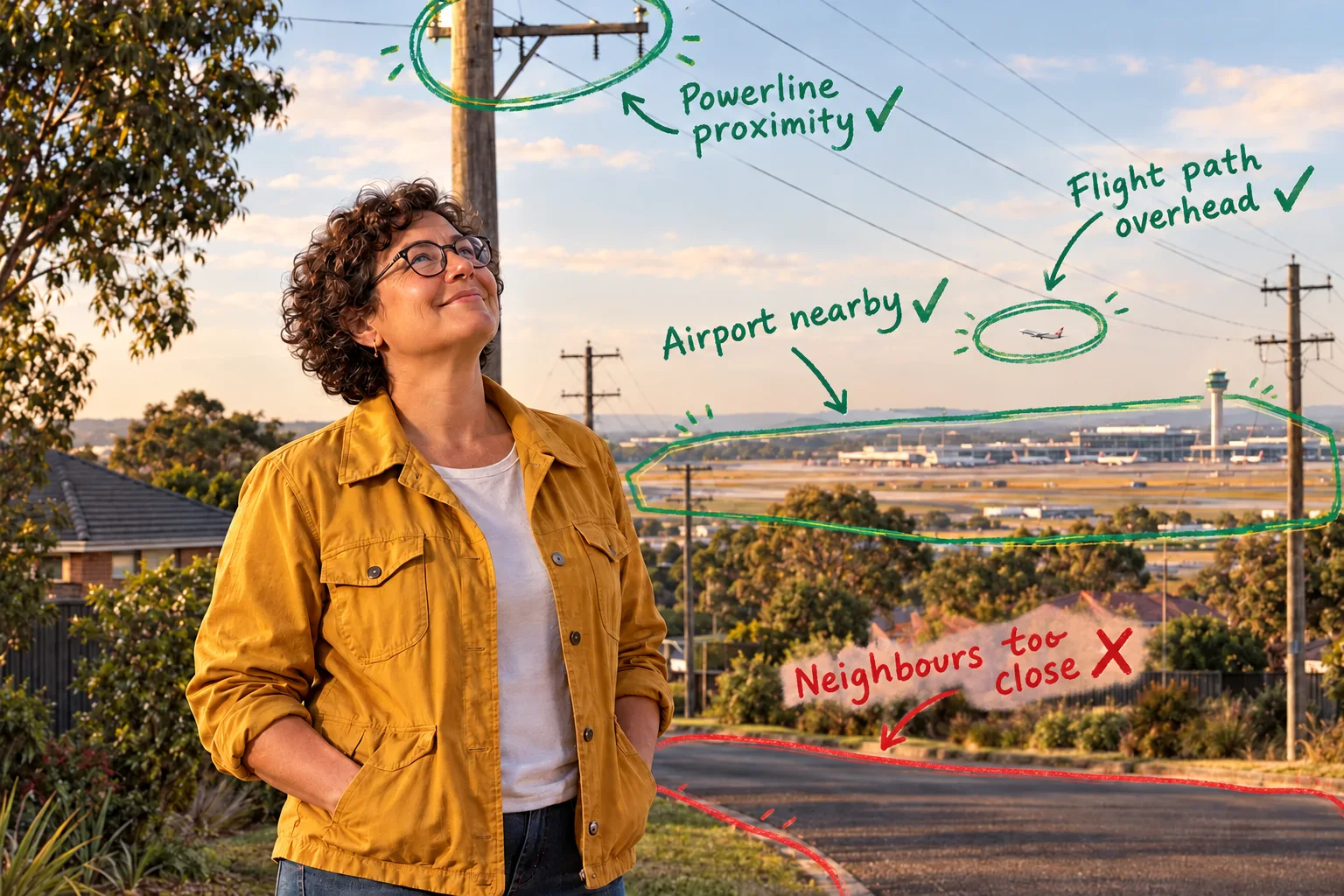
Some people want a quiet street. Others may value an unusual outlook, an edge-of-city setting, or proximity to infrastructure many buyers avoid.
Use Emptor to state the brief, test the trade-offs, and see where a personal definition of 'ideal' leads.
Emptor → Kaveat Area context
The decision problem
The feature you want may be someone else's deal-breaker
A location search often treats airports, waste facilities, power infrastructure, or busy edges as automatic negatives.
Preferences differ, but a personal model still needs a way to represent an unusual brief without turning it into a recommendation. This page keeps the joke while making the boundary explicit: state the preference, then investigate the consequences.
Emptor → Kaveat Area
Name the unusual location factor and the relationship that matters, such as next to, within, or away from it.
Separate a genuine Requirement from a Preference, then add the everyday needs that still make the location workable.
Review the resulting areas as a shortlist for investigation, not as a verdict on noise, safety, contamination, planning, or value.
The Kaveat way
Turn the location question into a repeatable workflow
Define what matters, inspect the spatial result, and carry the same reasoning into the next supported step.
The intended route is Emptor → Kaveat Area. It shows where this use case begins, not a promise that every adjacent capability is available here.
Trust the inputs
Make the reasoning clear
Kaveat keeps the inputs behind a location result in view. Use that evidence to decide what to investigate next, then add the checks the property or situation requires.
A stress test for personalisation
A location model can represent an unconventional preference without calling it safe, popular, or suitable for anyone else.
- Inputs stay visible
- The model can be revisited
- Further checks remain yours
The boundary
Use the model as evidence, not a verdict
Kaveat should help you ask a better location question, not make the final decision for you.
Kaveat can help model location factors and spatial relationships when the relevant data is available. It does not assess contamination, radiation, aircraft noise, health risks, planning restrictions, land value, or safety. Verify official sources and seek qualified advice before relying on any location decision.
Does Kaveat recommend living beside a landfill, powerline, or airport?
No. This is a satirical example of personalisation, not a recommendation. Kaveat can help make an unusual location brief explicit; safety, health, noise, planning, environmental, and valuation checks remain separate.
Can I model any feature I can think of?
Only where the relevant location data and relationship can be represented. Kaveat is most useful when you can state the factor clearly, inspect the result, and verify the underlying context independently.
Context and sources
Consumer Affairs Victoria: Due diligence checklistReady to capture your location needs?
Define and score every location, everywhere that's important to you.