
Buyers beginning with familiar labels
Look beyond the labels that started your search.
Start with the location questions that matter to you, then use Emptor to investigate areas that may not fit neatly inside the first label you searched.
Emptor context
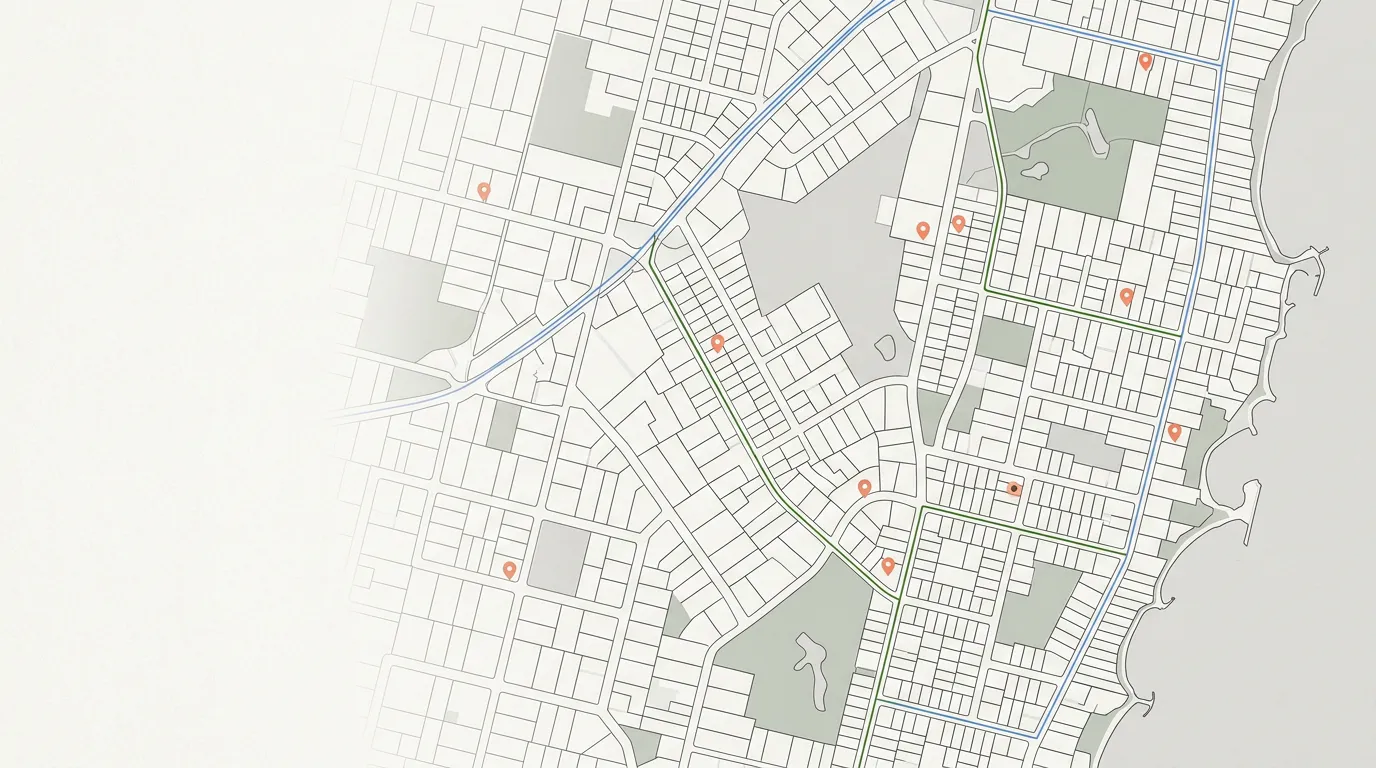
Illustrative context for this workflow. Replace with a real Emptor screenshot or short product tour before publishing product evidence.
The decision problem
The first filter can quietly become the whole search.
Suburb, postcode, and school labels are convenient ways to begin. They can also make the search feel more settled than it is, especially when the real decision is about access, routine, services, and trade-offs across a wider area.
What changes with Kaveat
A model you can carry into the next question.
The smallest useful workflow is explicit: define the model, inspect the result, and reuse it only where the product surface supports it.
Name the destinations, access needs, services, and trade-offs behind the search.
Test the model against a familiar area and a broader candidate geography.
Inspect why the result changed before deciding whether the new area belongs on your shortlist.
Product walkthrough
One decision, one visible change.
Emptor product tour
Record the approved starting state, one meaningful input, one result, and one saved next step. Do not generate interface text or scores with AI video tools.
Designed for a clear next action
The intended workflow is Emptor. That label is a routing cue, not a promise that every adjacent product capability is available on this page.
Next step
Explore EmptorProof and trust
Make the inputs verifiable.
Use product evidence first. Customer proof, logos, and metrics belong here only after they are approved and validated.
Replace this illustrative panel with an approved map showing a familiar shortlist, a broader candidate area, and a verifiable reason for the result.
Illustrative only · no customer evidence, logo, metric, or outcome claim is represented here
Testimonial placeholder
Add a verified quote from this audience after interview consent and claim review.
Customer logo placeholder
Add an approved customer or partner mark only after reference permission is recorded.
Validated metric placeholder
Add a measured result only when the cohort, method, timeframe, and owner are documented.
Scope and objections
Kaveat should help you ask a better location question, not make the final decision for you.
Will Kaveat tell me which suburb is best?
No. You define the priorities and inspect how the model relates to candidate locations. The result is decision support, not an objective ranking of every suburb.
What happens at a boundary?
Treat the boundary as something to inspect, not a magic line. Review the location, inputs, and source limitations before drawing a conclusion.
Keep exploring
Related use cases
Consumer property buyers
For property buyers
Turn the places, services, access, and trade-offs that matter to your household into a reusable location model.
ExploreRelocating buyers and international immigrants
Relocate to an unfamiliar area
Start with where you need to be, then explore the surrounding geography against the lifestyle priorities you define.
ExploreBuyers and agents
Compare shortlisted properties
Review several addresses against the same location priorities instead of comparing each one with a different mental checklist.
ExploreReady for the next location question?
Take the next supported step, then keep independent checks and professional advice in the process.
Explore Emptor