
Choose the smaller home around the life you still want
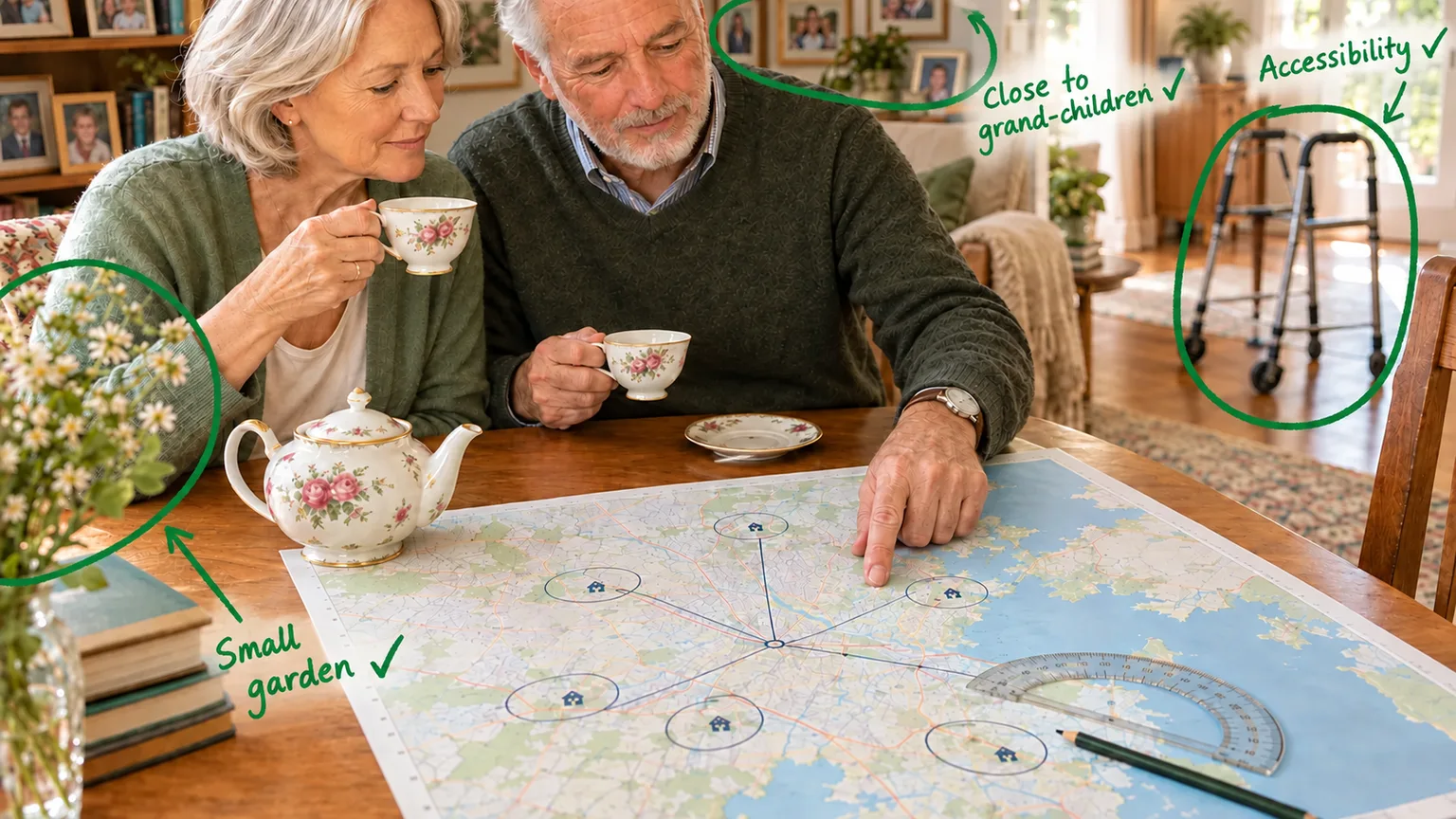
Downsizing is a location decision as much as a floor-plan decision. The right move can reduce maintenance, bring everyday services closer, and make it easier to stay connected to the people and routines you value.
Use Emptor to compare areas around walkable shops, healthcare, transport, parks, community life, family, and the kind of home you can manage now and later. Then carry those priorities into Comparo as specific homes enter the shortlist.
Keep the financial picture visible too: sale and purchase costs, strata or land-lease fees, rates, maintenance, and the cost of getting to the places you rely on still need separate calculations.
Emptor → Comparo context
The decision problem
The right downsize is more than a smaller floor plan
Empty-nest space, garden upkeep, stairs, and long drives can make the family home feel less useful than it once was. A smaller home may solve some of that while introducing new questions about healthcare, visitors, transport, community, and how easily daily tasks can be done without a car.
That makes location part of the future-proofing decision. Compare the places, access, and routines around each candidate area before a unit, villa, apartment, or land-lease community narrows the conversation to the building alone.
Emptor → Comparo
List the places your week depends on: a supermarket, pharmacy, GP, hospital or specialist, café, library, community centre, park, walking path, public transport stop, and family or friends.
Separate requirements from preferences: single-level living or lift access, a low-maintenance home, limited stairs, quiet streets, a bus or train connection, parking, or proximity to a major arterial road.
Compare candidate areas, then inspect each home and scheme separately for layout, accessibility, noise, strata or land-lease fees, rates, maintenance, care arrangements, and legal and financial implications.
The Kaveat way
Turn the location question into a repeatable workflow
Define what matters, inspect the spatial result, and carry the same reasoning into the next supported step.
The intended route is Emptor → Comparo. It shows where this use case begins, not a promise that every adjacent capability is available here.
Trust the inputs
Make the reasoning clear
Kaveat keeps the inputs behind a location result in view. Use that evidence to decide what to investigate next, then add the checks the property or situation requires.
The decision this workflow exposes
An area can look convenient on a map and still be a poor fit if the supermarket is reachable but a GP, train stop, walking route, or family support is not. Kaveat lets you compare those chosen destinations together, then keeps the remaining home and scheme checks visible.
- Inputs stay visible
- The model can be revisited
- Further checks remain yours
The boundary
Use the model as evidence, not a verdict
Kaveat should help you ask a better location question, not make the final decision for you.
Kaveat supports macro-location research and shortlisting. It does not decide when you should move or whether downsizing will improve your finances, and it does not assess care quality, retirement-community eligibility, strata or land-lease fees, building accessibility, construction, financial suitability, or the legal and inspection questions that still need independent advice.
Can Kaveat find the right retirement village for me?
Kaveat is not a retirement-village directory or care-quality rating. It can help you compare the location factors you choose to investigate, while provider, fee, care, and community questions need separate research.
Can it tell me whether an apartment will be suitable?
It can help with the surrounding location. Check the building, lift access, stairs, layout, noise, fees, strata, maintenance, and future needs independently before deciding.
Can Kaveat tell me whether an area will support ageing in place?
It can help compare the macro-location factors you nominate, such as healthcare, transport, walkable amenities, parks, and family access. It cannot assess the future care needs or accessibility of a particular dwelling.
Can Kaveat compare an over-55s or land-lease community?
It can help compare surrounding location factors. Verify eligibility, site or land-lease fees, exit fees, service charges, tenure, community rules, facilities, and financial implications with the provider and your advisers.
Context and sources
Australian Institute of Health and Welfare: Older AustraliansAustralian Government Department of Health: Aged careThe Agency: Your complete guide to downsizingRaspa Property Group: Downsizing guide for PerthSavills Australia: Downsizing — why and how to do itrealestate.com.au: A handy guide for downsizing in AustraliaReady to capture your location needs?
Define and score every location, everywhere that's important to you.